
The fastest way to clear roof moss can be the wrong choice for your shingles. In BC’s damp climate, moss is common, but aggressive scrubbing or high-pressure washing may damage roofing materials. Choosing roof moss treatment BC homeowners can feel confident about starts with understanding the roof’s condition and selecting an approach that suits it.
If you’ve spotted green growth, it’s reasonable to wonder whether it threatens your roof or whether cleaning could cause more harm. You don’t need to climb up to find out. This guide explains why moss takes hold in rainy parts of the Lower Mainland and Fraser Valley, what to note from the ground, and when professional roof cleaning and moss removal may help you decide on a next step.
We’ll also cover what to ask before hiring a provider, including how they’ll assess your roofing material, what the work involves, and what insurance and safety practices they have. So Clean Home Service provides roof cleaning and moss removal in Maple Ridge, Pitt Meadows, Coquitlam, Port Moody, Langley, Surrey, Mission, and Abbotsford.
Key Takeaways
- Understand how repeated wet weather and shaded roof areas can encourage moss growth around the Lower Mainland and Fraser Valley.
- Learn why roof moss treatment BC should suit the roof material, and why aggressive pressure washing may pose risks to delicate surfaces.
- Use a ground-level check to note moss, shaded areas, drainage concerns, and visible changes without climbing onto the roof.
- Compare monitoring, professional assessment, and treatment to decide on a sensible next step for your roof.
- Know what to clarify with a provider. So Clean Home Service serves Maple Ridge, Pitt Meadows, Coquitlam, Port Moody, Langley, Surrey, Mission, and Abbotsford.
Why roof moss treatment matters in BC’s wet climate
Seeing moss on your roof can be concerning, but its presence alone doesn’t tell you how much risk the roof faces. The amount and location of growth, the roofing material, and the roof’s overall condition all matter. In the Lower Mainland and Fraser Valley, recurring rain and humidity can keep some roof areas damp. Moss may grow more readily where sunlight and airflow are limited.
Roof moss treatment is intended to manage moss while respecting the roof material, rather than forcefully scrubbing or washing the surface. Understanding how moss grows helps explain why persistent moisture matters. Treatment is part of roof maintenance, but it doesn’t promise that moss won’t return. When considering roof moss treatment BC homeowners should weigh visible growth alongside the roof’s material and condition, rather than assume every patch needs the same response.
What roof moss treatment does, and what it does not promise
Treatment aims to address moss in a way that suits the roof, while avoiding unnecessary stress to its surface. It isn’t a guarantee against future growth, especially when damp, shaded conditions remain. Visible improvement after work and longer-term prevention are separate outcomes. Ask what result to expect, what the assessment includes, and whether the proposed approach is suitable for your roofing material.
Why BC homeowners notice moss on some roofs
Some roof areas stay wet longer than others. Shade from trees or nearby structures can limit sunlight, and moisture may persist where drying conditions are limited. These patterns can help explain why moss appears on one section of a roof but not another.
Local climate is only part of the picture. Roof age, roofing material, shade, weather exposure, and maintenance history can all affect what you see. For example, a roof beneath overhanging branches may have different conditions from a more open, sun-exposed roof nearby. That doesn’t establish the cause or condition on its own. Treat visible moss as a reason to observe and assess the roof, not as proof that damage has occurred. An assessment can help distinguish routine maintenance from signs that call for closer attention.
How BC rain, shade, and roof conditions affect moss growth
Across the Lower Mainland and Fraser Valley, repeated wet periods can leave roof surfaces damp between showers. Rain contributes moisture, but it doesn’t explain every patch of moss. How quickly a roof dries also depends on sunlight, airflow, drainage, nearby vegetation, and the roof’s material and condition.
Prolonged dampness can give moss more opportunity to grow, especially where sunlight and airflow are limited. This is a general guide, not a diagnosis of an individual roof. The same climate can affect two homes differently, so consider roof-specific conditions before deciding whether action is needed.
How humidity and moisture exposure influence roof moss
Humidity is water vapour in the air. The term humidity and moisture exposure describes ongoing contact with water vapour and liquid water, which can contribute to the conditions moss favours. In a rainy climate, repeated damp periods may keep some roof areas moist for longer, but rain alone doesn’t determine whether moss will take hold. Sunlight, airflow, roof material, and surrounding features all influence drying.
Climate provides context, but it can’t confirm what’s happening on a particular roof. An assessment can consider visible growth and roof condition together. If the roof is asphalt shingle, the Asphalt Roofing Manufacturers Association offers guidance on cleaning asphalt roofing systems. The suitable approach can depend on the roofing material, so don’t assume one method fits every surface.
Why shade and roof details change the picture
Limited sunlight can slow drying on shaded roof sections. Overhanging branches may cast shade and keep parts of a roof damp, while a taller nearby structure can shade another area. Drainage and exposure can also vary across a single roof, so moss may appear in specific spots rather than evenly across the surface.
From the ground, note which slopes look shaded, whether branches hang above them, and where visible growth appears. Don’t climb onto the roof to inspect it. These observations give a professional useful context, but they can’t confirm the roof material’s condition or identify every cause. If you’re unsure what the visible growth means, So Clean Home Service provides roof cleaning and moss removal in communities across the Lower Mainland and Fraser Valley. Ask how the roof’s material and condition will inform the recommended next step.
Roof moss treatment options: safe cleaning versus risky shortcuts
Seeing moss doesn’t automatically mean a roof needs immediate cleaning. Depending on the visible growth and roof condition, a sensible next step may be to monitor it, arrange a professional assessment, or consider treatment suited to the roofing material. The right choice for roof moss treatment BC homeowners are considering depends on the roof, not a one-size-fits-all method.
Pressure washing directs high-pressure water at a surface. On roof shingles, that force may disturb the surface or dislodge protective granules, so don’t assume it’s appropriate. Aggressive scrubbing and unverified chemical mixtures also bring risks. Avoid climbing onto a slippery roof or trying a treatment recipe without advice suited to your roof.
| Option | Purpose and considerations | When to seek professional advice |
|---|---|---|
| Monitor from the ground | Track where growth appears and whether it changes. This doesn’t confirm the roof’s condition. | Seek advice if growth spreads, you notice apparent changes, or you’re unsure what the roof is made of. |
| Professional assessment | Have a provider consider the roof material, visible moss, and condition before recommending a next step. | Ask for an assessment if you can’t safely judge the roof or suspect cleaning could harm it. |
| Appropriate treatment | Address moss using an approach selected for the roofing material and its condition. No single method suits every roof. | Before approving work, ask what method is proposed and why it fits your roof. |
When soft washing may be considered
Soft washing is a low-pressure cleaning technique that uses cleaning solutions. Whether it suits a particular roof depends on its material and condition, which should be assessed first. The phrase eco-friendly cleaning agents shouldn’t be taken as proof that a specific provider uses them. Ask what products and methods they propose, and how they’ll protect the roof and surrounding area.
Why high-pressure shortcuts can create problems
High-pressure water can be too forceful for some roof surfaces. That doesn’t mean every roof or circumstance is identical, but homeowners shouldn’t treat pressure washing as a default moss-removal method. Request a clear explanation of the recommended approach and its suitability before work begins.
For guidance on selecting a roofing service in BC, review the RCABC consumer guide. Ask prospective providers about their experience with your roof type, safety practices, and WorkSafeBC coverage. Clear answers can help you compare monitoring, assessment, and treatment without choosing a risky shortcut.
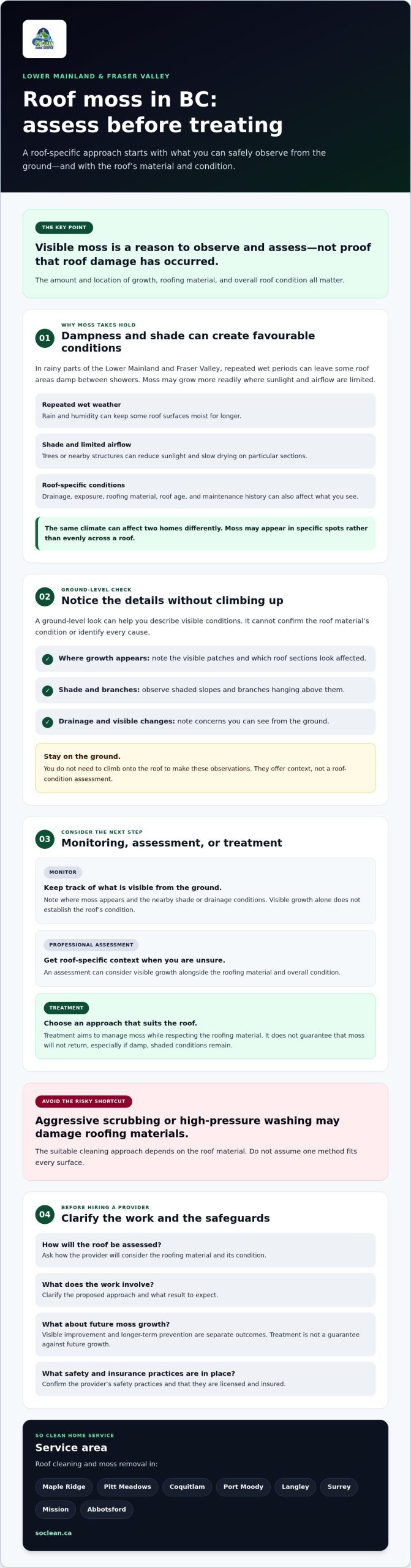
How to assess roof moss safely and plan maintenance in BC
A useful roof check starts from the ground, not a ladder. In rainy parts of BC, regular observation can help you notice changes and decide whether to keep monitoring or ask a professional to assess the roof. It won’t confirm roof damage, but clear notes can make a service discussion more useful.
What homeowners can check from the ground
Choose a safe spot with a clear view of the roof. Don’t climb onto the roof or a ladder to get a closer look. Record what you can see, then revisit those observations over time.
- 1. Note visible growth. Record which roof sections appear to have moss and whether its visible coverage seems to change.
- 2. Look for shade. Note slopes beneath overhanging branches or beside taller structures that may receive less sunlight.
- 3. Watch for drainage concerns. From the ground, look for apparent pooling, overflowing gutters, or areas where water doesn’t seem to drain as expected. Don’t try to inspect or clear anything from the roof.
- 4. Track apparent changes. Write down when you notice new growth or changes to the roof’s appearance. A visual observation alone can’t establish the cause or confirm damage.
- 5. Choose an informed next step. If growth appears limited and you’re not seeing other concerns, continue observing. If it looks extensive or you’re unsure about the roof’s condition, ask a professional for advice.
This ground-level check can help you describe what you’ve noticed, but it can’t confirm the roofing material, surface condition, or a suitable treatment. Leave roof access and treatment selection to a professional, particularly if the surface may be slippery or you can’t assess it safely. Even a step-by-step guide to removing moss from roof shingles can’t replace an assessment, because the right approach depends on the roof and its condition.
When to contact a roof cleaning professional
Contact a roof cleaning professional if growth is extensive, the roof’s condition is uncertain, or you can’t tell whether cleaning could harm the surface. Before approving work, ask about the team’s training and insurance, how they’ll assess your roof, why the proposed method suits its material and condition, and what the service process involves. Make sure you understand the recommendation before work begins.
For homeowners in the Lower Mainland and Fraser Valley, So Clean Home Service provides roof cleaning and moss removal. Learn about So Clean’s roof cleaning and moss removal service.
Choosing roof moss treatment in the Lower Mainland and Fraser Valley
Choosing a provider for roof moss treatment BC homeowners can trust starts with clear answers, not a promise that one method suits every roof. Before approving work, make sure the provider understands the roof’s material and visible condition, explains the proposed service, and discusses how the team will work safely. This gives you a sound basis for deciding whether treatment is appropriate.
Questions to ask before choosing a treatment
Ask the provider to explain the recommendation in plain language. A careful discussion should cover the roof itself, the work involved, and what you can reasonably expect. Useful questions include:
- How does the proposed approach suit my roof material and its current visible condition?
- What does the service include, and what results should I realistically expect?
- How will the team manage roof access and protect the surrounding property?
- What training and insurance does the company have, and who will complete the work?
Clear answers help you compare providers and understand the limits of the work. If a method or expected result is unclear, ask for an explanation before approving treatment. Don’t assume that a particular cleaning approach is suitable simply because it’s used on another roof.
What local experience can add
Experience serving the Lower Mainland and Fraser Valley can help a provider understand local wet weather and the maintenance questions it raises. It doesn’t guarantee a particular outcome, and it doesn’t replace an assessment of your roof. The provider should still consider your roof’s material, condition, shade, and visible growth before recommending a next step.
So Clean Home Service is locally owned and operated and serves residential and strata properties in the Lower Mainland and Fraser Valley. The company provides roof cleaning and moss removal in Maple Ridge, Pitt Meadows, Coquitlam, Port Moody, Langley, Surrey, Mission, and Abbotsford. When discussing service, ask about the proposed process, safety practices, and how the work will be planned for your property.
If you’re weighing your options, review the service information and ask questions about the proposed process before making a decision. Contact So Clean about roof moss removal.
Take the next step with confidence
In BC’s rainy climate, moss on a roof is a reason to pay attention, not a diagnosis of damage. Shade, moisture, roof material, and condition all shape the picture. Observe visible growth and drainage concerns from the ground, and avoid climbing onto a slippery roof or assuming pressure washing is suitable.
Good roof moss treatment BC homeowners can rely on starts with an informed choice. Monitoring, professional assessment, or treatment may each be appropriate, depending on the roof. Before approving work, ask how the proposed method suits your roofing material, what the service includes, and what results you can realistically expect.
So Clean Home Service is locally owned and operated and serves the Lower Mainland and Fraser Valley. If you’d like to discuss roof cleaning and moss removal, contact So Clean about roof moss removal. A careful assessment can help you choose a sensible next step for maintaining your home.
Frequently Asked Questions
Why does moss grow on roofs in BC?
Moss can grow where damp conditions persist and sunlight is limited. In the Lower Mainland and Fraser Valley, recurring rain can leave some roof areas wet for longer, especially beneath overhanging branches or beside taller structures. Rain alone doesn’t determine growth. Roof material, drainage, exposure, and maintenance history also affect whether moss appears and where it takes hold.
Does roof moss damage shingles?
Moss doesn’t automatically mean shingles are damaged, but it can hold moisture against roofing materials. Prolonged moisture may contribute to deterioration and, in some cases, cracking or leaks. Visible growth alone can’t confirm the roof’s condition, so don’t assume either that damage has occurred or that the roof is unaffected. Observe it safely from the ground and seek a professional assessment if you’re concerned.
Can I remove moss from my roof with a pressure washer?
Don’t assume pressure washing is suitable for roof shingles. It directs high-pressure water at the surface, which may disturb delicate roofing materials or dislodge protective granules. The risk depends on the roof and the method used, so avoid treating high pressure as a default solution. If moss needs attention, ask a professional to assess the material and explain an appropriate approach before approving work.
How often should a roof in BC be checked for moss?
There isn’t one inspection interval that suits every roof. Include ground-level roof observation in your regular home maintenance, and check for visible changes after periods of wet weather or if you notice drainage concerns. Note moss, shaded sections, and apparent changes over time. Don’t climb a ladder or walk on the roof to inspect it. Ask a professional if you’re unsure what you’re seeing.
What happens if roof moss is left untreated?
If moss remains on a roof, it may continue to hold moisture against the roofing material. Over time, this can contribute to deterioration and may be associated with cracking or leaks, though outcomes depend on the roof’s material, condition, and exposure. Moss doesn’t prove that damage has occurred. If growth is extensive or the roof’s condition is uncertain, arrange a professional assessment rather than guessing from the ground.
Is soft washing suitable for every roof?
No. Soft washing uses low pressure and cleaning solutions, but that doesn’t make it suitable for every roofing material or condition. A professional should assess the roof before recommending a method. Ask what approach and products the provider proposes, why they’re suitable for your roof, and what results you should expect. Don’t assume that a method used on another home is right for yours.
Should I remove roof moss myself or hire a professional?
Leave roof access and treatment to a professional if the roof is slippery, moss growth is extensive, or you’re unsure about its condition or material. Falls and unsuitable cleaning methods can create safety and roof-damage risks. You can observe the roof from the ground and record changes. So Clean Home Service is locally owned and operated and serves Maple Ridge, Pitt Meadows, Coquitlam, Port Moody, Langley, Surrey, Mission, and Abbotsford.