
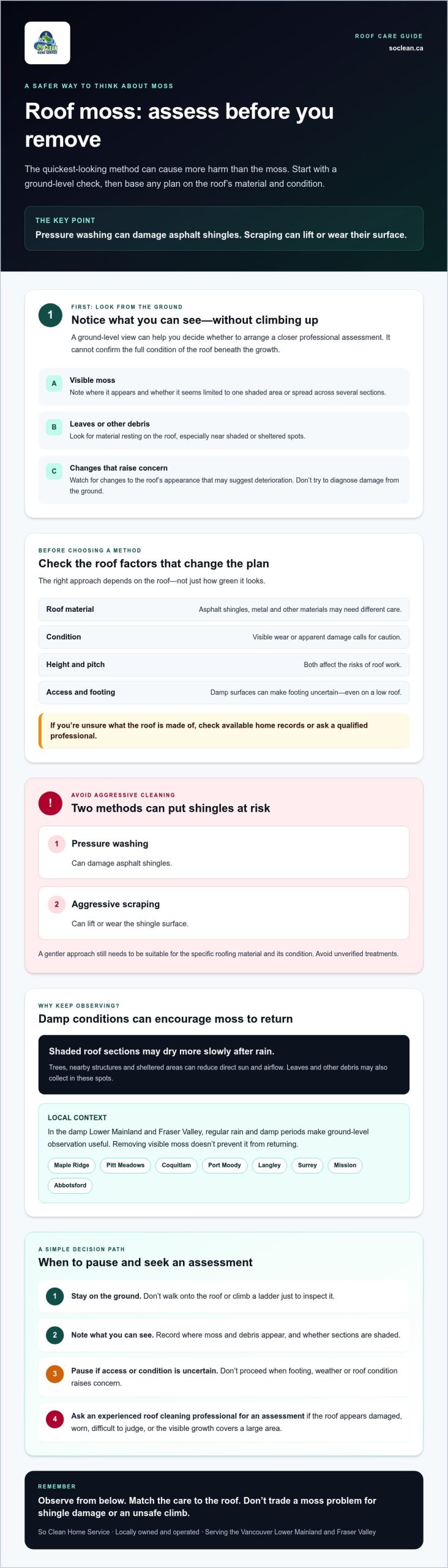
The quickest-looking way to remove moss off roof shingles may cause more harm than the moss itself. Pressure washing can damage asphalt shingles, while scraping can lift or wear their surface. Before choosing a method, check what you can see from the ground, note where the moss is growing, and consider the roof’s material, condition, height, pitch, and access.
In Maple Ridge, Pitt Meadows, Coquitlam, Port Moody, Langley, Surrey, Mission, and Abbotsford, damp periods can encourage moss to return. This guide explains what to look for, why aggressive cleaning and unverified treatments can put shingles at risk, and when it’s safer to leave the work to an experienced professional.
Roof cleaning and moss removal require care, especially when a roof is steep, high, or difficult to reach. So Clean Home Service is locally owned and operated, serving the Vancouver Lower Mainland and Fraser Valley. Use the guidance below to decide whether the roof needs attention and what a safe next step could be.
Key Takeaways
- Use a ground-level visual check to spot moss and consider the roof’s height, pitch, condition, and access before planning any work.
- Choose a moss removal approach based on the roofing material and its condition, and avoid unverified treatments.
- Pressure washing and aggressive scraping can harm shingles. Confirm that any gentler approach is suitable for the specific roof.
- In the damp Lower Mainland climate, keep observing the roof after wet periods. Removing visible moss doesn’t prevent it from returning.
- If roof access is unsafe or the roof appears damaged, stop DIY work and ask an experienced roof cleaning professional for an assessment.
Why moss grows on Lower Mainland roofs, and when removal matters
Roof moss is a small, green plant that grows on roof surfaces, often in patches or thick mats. Its presence is a sign of growth, but it doesn’t tell you on its own whether the shingles beneath are damaged. The amount of moss, the roofing material and condition, and how long moisture has lingered all help determine whether removal needs attention.
Roof moss removal is the careful clearing of moss from a roof to limit trapped moisture and help protect the roofing material. The right approach depends on the roof, not just how green it looks. For a general overview of roof cleaning methods, see Wikipedia’s roof cleaning page.
What conditions encourage moss on a roof?
Moss favours damp conditions and can establish more easily where a roof stays shaded. Trees, nearby structures, and sheltered sections can reduce direct sun and airflow. Those areas may dry more slowly after rain than exposed parts of the roof. Persistent humidity and moisture exposure can support moss growth, but it doesn’t mean every roof in the Lower Mainland will develop moss at the same rate.
In Maple Ridge, Pitt Meadows, Coquitlam, Port Moody, Langley, Surrey, Mission, and Abbotsford, regular rain and damp periods make ground-level observation useful. Pay particular attention to shaded sections and places where leaves or other debris collect. These conditions can keep surfaces damp, so note changes in visible growth rather than ignoring them.
When does roof moss need attention?
Start from the ground. Don’t walk onto the roof to inspect it. From a safe vantage point, look for visible moss, accumulated debris, and changes that may suggest the roof surface is deteriorating. A ground-level view won’t reveal every issue, but it can help you decide whether to arrange a closer professional assessment.
- Visible growth: Note where moss appears and whether it seems limited to one shaded area or spread across several sections.
- Debris: Look for leaves or other material resting on the roof, especially near shaded or sheltered spots.
- Possible deterioration: Watch for changes to the roof’s appearance that raise concern, without trying to diagnose damage from the ground.
If you can’t judge the roof’s condition or the extent of the moss from below, ask an experienced roof cleaning professional to assess it. This is especially sensible if the roof appears worn or the visible growth covers a large area. Before deciding how to remove moss off roof shingles, establish what you can about the roof and the growth. The next step is choosing a safe plan based on the material and condition.
Check the roof and plan safe moss removal before starting
Before deciding how to remove moss off roof shingles, assess what you can see without climbing onto the roof. Roof work is not a routine DIY task. The roof’s pitch, height, apparent condition, and access all affect the risks. Even a low roof may be slippery, and damp surfaces can make footing uncertain.
If you’re uncertain about safe access or the roof’s condition, pause and seek qualified help. Don’t use a ladder or step onto the roof just to get a closer look. From the ground, use available sightlines to check where moss and debris appear, whether sections are shaded, and whether there are visible changes that might suggest surface deterioration.
What to assess before choosing a removal method
Identify the roof material if you can. Asphalt shingles, metal, and other roofing materials may need different care, so don’t assume one cleaning approach suits them all. If you’re unsure what the roof is made of, check available home records or ask a qualified professional. For asphalt shingles, consult the ARMA moss cleaning guidelines and confirm that any planned care suits the roof’s condition.
As you look from below, note where growth appears and whether it is concentrated beneath trees or in sheltered areas. Look for debris and apparent damage, but don’t lift shingles, scrape moss, or disturb roofing materials to investigate. A ground-level view can help you describe what you see, but it can’t confirm the full condition of the roof beneath the growth.
How to prepare without taking unnecessary risks
Keep your inspection on the ground unless a qualified professional advises otherwise. Don’t proceed with ladder or roof work if access, footing, or weather is uncertain. In the Lower Mainland and Fraser Valley, damp conditions can change how safe a surface feels, so a dry-looking patch isn’t proof that the roof is safe to walk on.
- Record the visible areas of moss and debris from a safe vantage point.
- Note nearby trees, structures, or sheltered sections that may affect shade and drying.
- Before cleaning begins, keep people clear of the work area and protect nearby property from falling debris.
If the roof’s material, condition, or moss coverage remains unclear, leave the assessment and removal plan to an experienced provider. So Clean Home Service provides roof cleaning and moss removal for residential and strata properties across its Lower Mainland and Fraser Valley service area. Learn more about professional roof cleaning and moss removal before deciding on your next step.
How to remove moss off roof shingles with a careful process
A careful plan protects the shingles rather than chasing a spotless appearance. Before you decide how to remove moss off roof shingles, confirm what the roof is made of and whether anyone can reach it safely. Moss that looks limited from the ground can extend farther across the roof, and visible growth alone doesn’t show whether the surface underneath is sound.
A step-by-step approach for limited, accessible growth
Use this sequence to decide what the next step should be. It isn’t an instruction to climb onto the roof. Even when the visible moss appears limited, access may require a qualified professional.
- Assess from the ground. Note where moss and debris appear. If you can’t see the affected area clearly, don’t climb up to get a closer look.
- Identify the roofing material. Check available records or ask a qualified professional if you’re unsure. A method suitable for one material may not suit another.
- Confirm compatible care. Follow the roofing manufacturer’s guidance and the cleaning product’s label exactly. Don’t guess at a mixture, application method, or contact time.
- Reassess after the work. Check the roof’s appearance from the ground. If shingles look damaged or the roof remains difficult to assess, stop and seek professional advice.
Don’t pressure wash roof shingles or aggressively scrape moss away. Force can disturb or damage roofing materials. If safe access or the roof’s condition is uncertain, pause and get qualified help instead of trying to complete the job yourself.
When soft washing may be considered
Soft washing is a low-pressure cleaning technique that uses eco-friendly cleaning agents. It may be considered only when the approach and product are confirmed as suitable for the specific roofing material and condition. “Low pressure” doesn’t mean every treatment is appropriate, harmless, or suitable for DIY use. Read and follow product instructions, and confirm material-specific guidance before proceeding. For more on what to consider, see this guide to soft wash roof treatment for Lower Mainland homes.
There’s no one method to recommend for every roof. In the damp Lower Mainland, choosing an approach suited to the roof matters more than removing visible growth quickly. Don’t assume a cleaning treatment will prevent moss from returning. If the roof is steep, high, damaged, or hard to access, leave the work to an experienced roof cleaning professional. A cautious decision can help avoid turning routine moss removal into shingle repairs.
Why pressure washing and aggressive scraping can damage roof shingles
More force doesn’t necessarily mean safer or better moss removal. A strong water stream or forceful scraping may disturb roofing materials, particularly if shingles are already worn or damaged. The effect depends on the roof material and condition, so don’t assume a method suitable for one surface is right for yours.
Pressure washing versus soft washing
Pressure washing uses high-pressure water to remove residues from surfaces. On asphalt shingles, the Asphalt Roofing Manufacturers Association warns against high-pressure washing because it can damage the shingles. Avoid pressure washing roof shingles rather than testing whether they can withstand it.
Soft washing uses low-pressure water with eco-friendly cleaning agents. That difference alone doesn’t make it suitable for every roof. The roofing material, existing condition, and product instructions must guide the choice. Follow the manufacturer’s care guidance and the product label exactly. Don’t treat any cleaning method as universally safe.
- Pressure washing: High-pressure water may harm roofing material, especially asphalt shingles. Don’t use it on roof shingles.
- Aggressive scraping: Forceful scraping can lift, scratch, or dislodge roofing materials, depending on the roof type and condition.
- Carefully selected low-pressure treatment: May be considered only when confirmed as compatible with the roofing material and used according to product instructions.
Why scraping moss can be a poor shortcut
Scraping can make moss appear to come off quickly, but hard or firmly attached growth can tempt you to push harder. That pressure may disturb shingles or their surface. Avoid motions or tools that lift, scratch, or dislodge roofing materials. A roof that already shows signs of wear calls for extra caution, not more force.
If moss doesn’t come away without force, stop. Don’t keep scraping to get a cleaner-looking result. The roof type and condition matter, and climbing onto a roof adds another risk if access or footing is uncertain. Ask a qualified professional to assess the situation before choosing a cleaning approach.
For homeowners in the Lower Mainland and Fraser Valley, the safest method isn’t simply the one that sounds gentlest. It’s the method confirmed as appropriate for that specific roof and carried out with safe access. If you’re unsure, contact So Clean Home Service about roof cleaning and moss removal.
After moss removal: reduce regrowth and know when to call a professional
Clearing visible moss is one part of roof care, not a guarantee that it won’t return. In the Lower Mainland and Fraser Valley, wet periods and shaded roof sections can continue to create conditions that favour growth. Keep an eye on the roof from the ground, especially after prolonged rain, and note changes without climbing up to inspect them.
How to monitor the roof after cleaning
Use the same safe viewpoints over time. Notice whether moss reappears in the same shaded areas, whether debris collects, or whether the roof’s appearance changes. Ongoing shade and humidity and moisture exposure may remain even after cleaning, so a clear-looking roof right after the work doesn’t mean growth can’t return.
If moss returns, spreads, or appears alongside changes to the roof surface, arrange a professional reassessment rather than repeating a DIY treatment. Keep a simple record of what you can see and when you noticed it. That information can help a professional understand how the roof has changed without you needing to disturb the shingles.
When professional roof moss removal is the safer choice
Some roofs are better left to experienced professionals from the start. Seek help if the roof is steep, high, damaged, or difficult to access. Extensive growth, an uncertain roofing material, or unclear signs of deterioration are also reasons to pause DIY work. Don’t climb up to check whether moss is firmly attached or to test a cleaning method.
Before work begins, ask what process the provider proposes and how they’ll confirm it suits your roofing material and its condition. Ask what the process involves and what its limits are. No removal method can promise that moss won’t grow back, particularly where shade and damp conditions persist.
So Clean Home Service provides roof cleaning and moss removal for residential and strata properties in the Vancouver Lower Mainland and Fraser Valley, including Maple Ridge, Pitt Meadows, Coquitlam, Port Moody, Langley, Surrey, Mission, and Abbotsford. The locally owned and operated business was founded in 2009. If roof access feels unsafe or you’re unsure how to remove moss off roof shingles without harming them, contact So Clean Home Service to discuss professional roof cleaning and moss removal.
Protect your roof with a careful next step
In the Lower Mainland’s damp climate, moss can return, so observe your roof from the ground, especially after prolonged wet periods. Before you remove moss off roof shingles, consider the roof material, visible condition, and whether access is safe. Avoid pressure washing and forceful scraping, which can damage shingles.
If the roof is steep, high, damaged, or difficult to assess, leave the work to a professional. Ask how the proposed process suits your roofing material and what the work involves. A careful assessment can help you choose a sensible maintenance plan without taking unnecessary risks.
So Clean Home Service is locally owned and operated and provides roof cleaning and moss removal for residential and strata properties. Ask So Clean Home Service about roof moss removal and take the next step with confidence.
Frequently Asked Questions
How do you remove moss off a roof without damaging shingles?
The safest way to remove moss off roof shingles is to choose a method that suits the roofing material, its condition, and safe access. Start with a ground-level visual check, then follow the manufacturer’s care guidance or advice from a qualified professional. Avoid pressure washing and forceful scraping, which can damage some shingles. Don’t climb onto the roof; stop and seek help if access is unsafe or the roof appears damaged.
Can you use a pressure washer to remove moss from a roof?
Pressure washing uses high-pressure water to remove residue, and that force may damage some roofing materials, including asphalt shingles. Don’t treat it as a method suitable for every roof. Check the care guidance for your specific material and ask a qualified professional if you’re unsure. Soft washing uses low pressure with eco-friendly cleaning agents, but it also needs to be confirmed as suitable for the roof and product instructions.
Is soft washing safe for roof shingles?
Soft washing may suit some roofs, but it isn’t automatically safe for every shingle. It uses low-pressure water and eco-friendly cleaning agents; the right choice depends on the roofing material, its condition, and the product instructions. Before treatment, confirm the proposed process with a qualified provider. If shingles look damaged or you can’t identify the roof material, don’t proceed until you’ve received guidance specific to your roof.
Should I scrape moss off roof shingles?
Avoid aggressive scraping, since forceful contact can disturb or damage some roofing materials. Don’t climb onto the roof or push harder to remove firmly attached growth. Check the care guidance for your specific roof material before considering any cleaning method. If moss is widespread, access is difficult, or shingles appear damaged, stop and ask a qualified professional to assess the roof rather than risking further damage.
Why does moss grow on roofs in the Lower Mainland?
Shade and persistent dampness can encourage moss growth, while the rainy Lower Mainland climate makes humidity and moisture exposure a practical concern. Shaded roof areas may stay damp longer than exposed sections, but not every home faces the same risk. Check the roof periodically from the ground, especially after prolonged wet periods, and pay attention to shaded areas where growth or debris may be visible.
Can roof moss come back after removal?
Yes, moss can return after removal; clearing visible growth doesn’t guarantee it won’t reappear. Shade, moisture, the roof’s condition, and the cleaning approach can all affect what happens next. Observe the roof from the ground over time, especially around shaded sections. If moss returns or the roof’s appearance changes, ask a qualified professional whether further assessment or suitable maintenance is needed.
When should I hire a professional to remove roof moss?
Hire a professional if the roof is steep, high, damaged, difficult to access, or made from an unknown material. Safe access and a cleaning approach suited to the roof matter as much as the visible result. Ask what process the provider proposes and about its roof-cleaning experience. So Clean Home Service provides roof cleaning and moss removal for residential and strata properties in Maple Ridge, Pitt Meadows, Coquitlam, Port Moody, Langley, Surrey, Mission, and Abbotsford.