
What matters most when choosing roof cleaning is not just how quickly growth disappears, but whether the method suits your roof. For homeowners in Maple Ridge and across the Lower Mainland, a soft wash roof treatment can seem like a gentler option when moss returns in damp, rainy conditions. It’s reasonable to be cautious: aggressive pressure can put some roofing materials at risk, and not every roof is suited to the same approach.
Soft washing uses low pressure with cleaning agents to treat surface growth, rather than relying on a forceful stream of water. The right process still depends on your roof’s material, condition, and needs. This guide explains how soft washing works, what to ask before arranging roof treatment, and how to think about maintenance in a region with regular moisture exposure.
So Clean Home Service provides roof cleaning and moss removal across the Vancouver Lower Mainland. Before deciding whether soft washing is appropriate for your home, use the questions in this guide to discuss roof suitability and the proposed work with a provider.
Key Takeaways
- Let your roof’s material and condition guide a soft wash roof treatment. No single cleaning method suits every roof.
- Before booking, ask about the roof assessment, preparation, treatment method, and follow-up guidance.
- Compare soft washing with pressure washing, and ask why the difference in water pressure matters for your roof.
- Prepare for service with a clear checklist, then observe how moisture exposure affects your roof over time.
- Choose a Lower Mainland provider that clearly explains the work and how its recommendation fits your roof.
What Is Soft Wash Roof Treatment, and Why Consider It in the Lower Mainland?
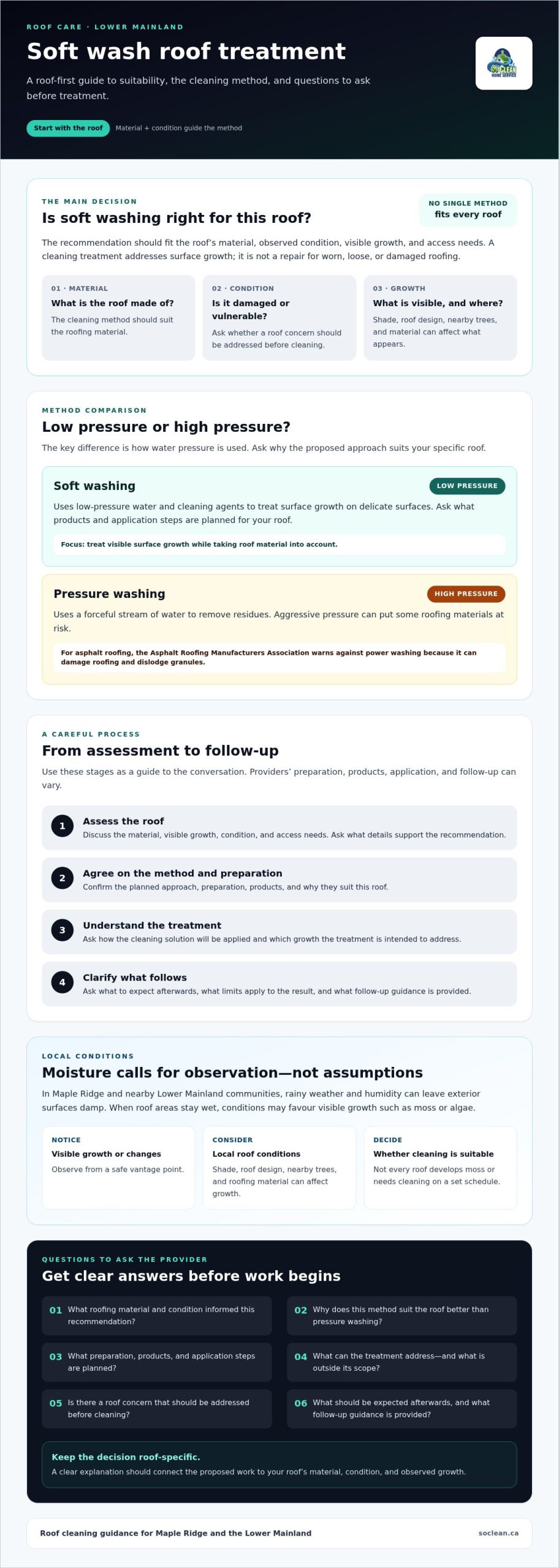
A soft wash roof treatment is a low-pressure cleaning approach that uses cleaning agents on delicate surfaces. Rather than relying on forceful water to remove growth, soft washing is intended to treat visible moss or other surface growth while taking the roof material into account. It addresses surface growth, not roof damage, so it shouldn’t be treated as a repair for worn, loose, or damaged roofing.
Soft washing uses low-pressure water and cleaning agents to treat delicate surfaces; pressure washing uses high-pressure water to remove residues. This difference matters because a powerful stream may be unsuitable for some roofing materials. For a general overview of the method, see What is soft washing? A provider should still assess your roof and explain whether the proposed approach suits its material and condition.
What does a soft wash roof treatment involve?
At a basic level, the method combines low pressure with cleaning agents to address surface growth. Eco-friendly cleaning agents are non-toxic chemicals used in soft washing to clean materials such as vinyl siding and roofs. Preparation, application methods, and products can vary, so ask the provider what they plan to use on your roof and why. Don’t assume that one treatment is right for every surface.
Why do Lower Mainland roofs need ongoing attention?
In Maple Ridge, Pitt Meadows, and nearby communities, rainy weather and humidity can leave exterior surfaces damp. When roof areas stay wet, conditions may favour visible growth such as moss or algae. Shade, roof design, surrounding trees, and roofing material can also affect what appears and where. That doesn’t mean every roof will develop moss or needs cleaning on a set schedule.
Make observation part of routine home care. From a safe vantage point, look for visible growth or changes in the roof’s appearance. If you’re unsure what you’re seeing, ask a qualified provider for an opinion. Regular checks can help you decide whether cleaning is appropriate, rather than waiting until growth is widespread or assuming every stain needs treatment.
Roof suitability comes first. Ask the provider to identify the roofing material, describe the proposed method in plain language, and clarify what the treatment can and cannot address. A careful assessment helps you make an informed choice for your home and local conditions. Cleaning is not a substitute for roof repair.
How Soft Wash Roof Treatment Works: A Careful Process From Assessment to Follow-Up
A responsible soft wash roof treatment should begin with the roof, not a preselected cleaning method. The roof material, visible growth, current condition, and access needs all help determine whether treatment is suitable. Ask the service team to explain the proposed work before it begins, including the products and preparation involved.
What should a roof assessment check first?
An assessment should consider the visible growth, whether the roof appears damaged or especially vulnerable, and what access the work may require. These are useful discussion points, not a substitute for a professional inspection. Suitability depends on the roofing material and its observed condition. Ask which details informed the recommendation and whether anything suggests cleaning should wait while you address a roof concern.
This distinction matters for asphalt roofing. The Asphalt Roofing Manufacturers Association warns against power washing because it can damage roofing and dislodge granules. Its ARMA roof cleaning guidelines explain why the cleaning method should match the roof. A provider still needs to assess your specific property.
What happens during and after treatment?
Before booking, ask the provider to describe each planned step, including preparation, how the cleaning solution will be applied, which products will be used, and what to expect afterwards. These details vary, so confirm them with the service team rather than assuming they’re standard for every soft wash. Ask what follow-up guidance they provide and whether the treatment is intended to address the growth you’ve observed.
In general, a careful roof-cleaning sequence includes assessment, agreement on a suitable method and preparation, treatment as explained by the provider, and follow-up guidance. Use this as a guide to questions, not as a description of every provider’s exact procedure. Ask the team to confirm its steps and explain any limits on the expected result. Treatment addresses surface growth; it isn’t a repair for roof damage.
- Assess: Discuss the roof material, visible growth, condition, and access.
- Plan: Confirm suitability, preparation, application method, and products with the provider.
- Treat: Have the team explain the work before it starts and what it is meant to address.
- Follow up: Ask what to expect afterwards and what guidance is available for ongoing observation.
For homeowners in Maple Ridge and nearby communities, clear answers make it easier to compare recommendations and understand the scope of roof cleaning. You can review So Clean Home Service’s roof cleaning and moss removal information, then ask the team to clarify any process details relevant to your roof.
Soft Washing vs. Pressure Washing: Which Roof-Cleaning Method Fits?
Soft washing cleans with low pressure and cleaning agents, while pressure washing uses high-pressure water. That difference can guide a conversation about roof care, but it doesn’t make one method suitable for every roof. The material, condition, and visible growth should inform the provider’s recommendation.
Why does pressure matter when cleaning a roof?
Low-pressure cleaning relies less on water force, while pressure washing directs a stronger stream at the surface. A roof’s ability to withstand a cleaning method depends on its material and condition, so don’t choose based on the method’s name alone. For asphalt roofing, the Asphalt Roofing Manufacturers Association advises against power washing because it may damage the roofing and dislodge granules. Ask for an assessment specific to your roof.
| Method | Pressure level | Intended use | Questions to ask |
|---|---|---|---|
| Soft washing | Low pressure | Cleaning delicate surfaces with cleaning agents to treat surface growth | Is this appropriate for my roof material and its current condition? Which cleaning agents will you use? |
| Pressure washing | High-pressure water | Removing residues from surfaces with a forceful water stream | Why do you recommend this method for my roof? What precautions and limitations apply? |
What should homeowners ask before choosing a method?
Before agreeing to a soft wash roof treatment or another approach, ask the provider to explain the recommendation in plain language. A useful discussion should cover more than the visible growth. Ask:
- What roofing material and condition did you observe, and how do they affect the recommended method?
- Which cleaning agents do you plan to use, and how will you manage the work?
- What preparation is needed, what should I expect after treatment, and what limitations should I understand?
- What follow-up guidance will you provide?
In Maple Ridge and other Lower Mainland communities, roof access and safe work practices are also worth discussing before booking. Ask how the team plans to access your roof and what safety precautions it takes for your property. Clear answers help you understand the proposed work and whether the provider has considered the specifics of your home.
Local humidity and moisture exposure can contribute to visible growth, but the right question isn’t simply “Which method cleans best?” It’s “Which approach is appropriate for this roof, and why?”
How to Prepare for Roof Treatment and Maintain Your Roof in a Damp Climate
A little preparation helps keep a roof-cleaning visit clear and predictable. Before a soft wash roof treatment, confirm the work plan and service-day instructions with the provider. Share what you know about the roof, including visible concerns and previous maintenance, so the team can consider that information before work begins.
What should you do before a technician arrives?
Use this checklist to prepare for a conversation with your provider:
- Confirm access: Ask which areas the team needs to reach and whether you need to make any arrangements.
- Discuss roof condition: Point out any damage or areas of concern you’ve noticed from the ground.
- Share maintenance history: Mention previous cleaning or other roof work, if you know when it took place and what was done.
- Ask about the service day: Confirm preparation instructions directly with the provider rather than assuming what’s required.
These steps help the provider understand the property and explain the proposed work. They don’t replace an assessment or confirm that treatment is suitable. If you’re unsure about a preparation request, ask why it’s needed before the appointment.
How can you monitor your roof after treatment?
In Maple Ridge, Langley, and other Lower Mainland communities, rain and humidity make ongoing observation useful. Moisture exposure can contribute to visible growth on exterior surfaces, but conditions and results vary from roof to roof. Check the roof periodically from a safe location, such as the ground. Don’t climb onto the roof to inspect it.
Look for new or returning visible growth, unusual discolouration, or signs that the roof’s condition may have changed. These observations don’t diagnose a problem, but they can help you decide when to ask a qualified provider for an assessment. There’s no single treatment interval that suits every home, so base maintenance decisions on what you observe and the guidance you receive.
Roof treatment addresses surface growth; it doesn’t repair damaged roofing or replace other homeowner responsibilities. If you notice damage, ask a suitable professional about repair needs rather than assuming a cleaning service will resolve them. Langley homeowners can also look for the planned guide to roof moss removal in Langley for location-specific maintenance guidance.
For roof cleaning and moss removal in the Lower Mainland, contact So Clean Home Service to discuss your roof’s condition, access needs, and preparation questions before arranging service.
Choosing a Soft Wash Roof Treatment Provider in the Lower Mainland
A suitable provider should be able to explain how your roof’s material and condition affect the recommended cleaning method. Before arranging a soft wash roof treatment, look for clear answers about the assessment, the work included, and what to expect afterwards. A specific explanation is more useful than a broad promise about results.
How do you assess a roof-cleaning company?
Use these questions to compare providers and understand the proposed service:
- Credentials and training: Is the company licensed and insured? How do technicians prepare for roof-cleaning work?
- Roof assessment: What did the provider observe about your roof’s material, visible growth, condition, and access?
- Recommended method: Which cleaning method does the provider recommend for this roof, and why? Ask for the explanation in plain language.
- Service scope: What does the roof-cleaning and moss-removal service include, and what does it not address?
- Follow-up: What should you expect after the work, and what guidance will the provider give for monitoring the roof?
Good answers should be specific to your property. Be cautious of claims that don’t explain the method or promise a particular outcome without discussing roof suitability. Cleaning treats surface growth; it doesn’t repair roof damage. If the provider identifies a concern beyond the cleaning work, ask what kind of professional assessment may be appropriate.
Where does So Clean Home Service operate?
So Clean Home Service is locally owned and operated, and serves the Vancouver Lower Mainland, including Maple Ridge, Pitt Meadows, Coquitlam, Port Moody, Langley, Surrey, Mission, and Abbotsford. The business provides roof cleaning and moss removal. These details give homeowners a starting point when considering a provider and asking how the team will approach their roof.
Before booking, discuss your roof’s material and condition, the proposed method, the work included, and any follow-up guidance. That conversation can help you decide whether the service fits your needs and what questions still need answers.
If you’re in the Lower Mainland and considering roof cleaning or moss removal, discuss roof cleaning with So Clean Home Service.
Make a Roof-Care Plan That Fits Your Home
In the Lower Mainland’s damp climate, regular observation can help you notice visible roof growth or changes that may need attention. A soft wash roof treatment uses low pressure, but the right approach still depends on the roof’s material and condition. Before work begins, ask the provider to explain the assessment, recommended method, service scope, preparation requirements, and follow-up guidance.
Roof cleaning addresses surface growth, not damage or repairs. Keep those needs separate, and avoid climbing onto the roof to check its condition. A clear discussion with a provider can help you decide what makes sense for your home.
So Clean Home Service is locally owned and operated and serves the Vancouver Lower Mainland. If you’re considering roof cleaning or moss removal, contact So Clean Home Service to discuss your roof.
Frequently Asked Questions
What is soft wash roof treatment?
A soft wash roof treatment uses low-pressure cleaning and cleaning agents to address visible growth on a roof. Unlike pressure washing, it doesn’t rely on a high-pressure water stream. The approach may suit some delicate surfaces, but roof material and condition matter. Ask the provider to assess your roof and explain why the proposed method fits before arranging service.
Is soft washing safe for roof shingles?
Soft washing may be appropriate for some shingle roofs, but it isn’t automatically safe for every roof. Suitability depends on the shingle material, its condition, and the treatment proposed. Ask the provider to assess your roof and explain the method, cleaning agents, and any limitations. If shingles look damaged or loose, raise that concern before booking. Cleaning isn’t a substitute for repairs.
Can you pressure wash a roof to remove moss?
Pressure washing uses high-pressure water, so don’t assume it’s appropriate for remove moss off roof shingles. The Asphalt Roofing Manufacturers Association warns against power washing asphalt roofing because it can damage the surface and dislodge granules. Roof materials differ, so ask a qualified provider to assess your roof and explain the recommended approach. A method suited to another exterior surface may not suit your roofing.
How does soft wash roof treatment work?
A soft wash roof treatment generally involves assessing the roof, deciding whether low-pressure cleaning is suitable, treating visible growth, and discussing follow-up. Preparation, application methods, products, and aftercare can vary, so confirm these details with the service provider rather than assuming a standard process. Share known roof concerns and ask what the treatment is intended to address, along with any limits on expected results.
What should I expect after a soft wash roof treatment?
Ask the provider what to expect after treatment, since visible results and follow-up guidance depend on the roof and the specific work performed. Don’t assume all growth or discolouration will disappear immediately, or that cleaning will resolve roof damage. Request a clear explanation of what the service addressed, what changes to watch for, and when to seek another assessment. Observe the roof from a safe location.
How often should a roof be treated for moss in the Lower Mainland?
There isn’t one treatment schedule that suits every Lower Mainland roof. Rain and humidity contribute to moisture exposure, but growth also depends on the roof’s material, condition, shade, and surroundings. Check your roof periodically from the ground for visible moss or changes, and ask a qualified provider for an assessment if you have concerns. Avoid climbing onto the roof to inspect it.
Does soft washing remove roof moss permanently?
No cleaning method can be assumed to prevent moss from returning permanently. Conditions in Maple Ridge, Pitt Meadows, Coquitlam, Port Moody, Langley, Surrey, Mission, and Abbotsford vary, and ongoing moisture can favour visible growth. Ask the provider what the treatment can reasonably address and what follow-up they recommend. Continue periodic visual checks from a safe location, and seek advice if growth returns or the roof’s condition changes.