
Could moss treatment put pets or nearby plants at risk if it’s applied carelessly? To prevent slips and falls on mossy walkways, control growth on damp, slippery surfaces and keep treatments away from landscaping. In Maple Ridge, Pitt Meadows, Coquitlam, Port Moody, Langley, Surrey, Mission and Abbotsford, wet conditions can leave shaded paths and patios prone to moss and algae.
It’s reasonable to want safer walkways without exposing children, pets or garden beds to unnecessary contact with cleaning products. Brushing off loose growth and taking care around nearby plants can help. If plants are exposed during treatment, rinse them well.
This article explains when moss and other growth need attention, how shade, moisture and drainage affect regrowth, and which upkeep habits help reduce slip and trip hazards. You’ll also learn how to manage moss around pets and landscaping, and when professional walkway cleaning may be a practical next step.
Key Takeaways
- Control moss and other growth on paths where it could reduce traction, especially when surfaces stay damp.
- Look for shade, poor air circulation and standing water when assessing why growth returns.
- Clear leaves and debris, keep drains open, and address uneven or damaged walking surfaces to reduce slip and trip hazards.
- Time upkeep around seasonal growth and consider professional cleaning when moss-covered areas are difficult to manage safely.
1. Removing algae, lichen and moss from hard surfaces
Algae, lichens, liverworts and moss can make concrete paths, stone patios and decking slippery. Growth and moisture reduce the grip between footwear and the walking surface. A slip occurs when footwear has too little friction or traction against the ground. Even a thin film can obscure surface texture, especially after Lower Mainland rain. Growth on hard surfaces can create a slip hazard, so address it where people walk.
Moss often takes hold where shade and poor air circulation keep paths damp. North-facing walls, covered patios and tree-shaded sidewalks may stay sheltered from sun and wind. These conditions allow moisture-loving moss, algae and liverworts to establish on paving. Inspect shaded edges and joints, where dampness may linger after the surrounding ground dries. Prioritize routes people use regularly, including steps and entrances.
Loose gravel needs a different approach from fixed paving. Rake gravel regularly to disturb growth and remove loose material before it builds up. Beside paths, lightly fork compacted garden beds to improve drainage and water absorption. Better-drained soil can reduce pooling near paving and help surfaces dry after rain. Limit paving to essential access routes; permeable paving can help discourage growth on new surfaces.
During Canadian winters, wet surfaces can become slick when temperatures fall below freezing. Sand, salt or ice-melt products can help reduce slippery conditions. Apply them to the affected walking area and clear remaining slush as conditions change. At steps, non-slip treads or strips add grip where footwear lands. Mats, abrasive strips, abrasive-filled coatings, and metal or synthetic decking can also add traction.
Match modifications to the surface and keep walking routes clear. Secure mats so their edges lie flat, and inspect fixed strips for wear or loose edges. Check for standing water after rain, since damp conditions can encourage new growth. Along with removing growth where it compromises traction, these measures help prevent slips and falls on mossy walkways.
2. How to prevent falls from slips and trips
Moss on a walkway or patio can reduce traction, especially when rain leaves the surface wet. Treat it as a hazard on entrances, steps and frequently used paths. Then look beyond the visible growth: loose stones, cracked paving and raised edges can catch footwear. A slippery surface and an uneven one may create different risks in the same spot.
In British Columbia, the Occupiers Liability Act places a duty on whoever controls a property to take reasonable care that people using it are reasonably safe. Keep walkways clear and address hazards as part of regular property upkeep.
Start your inspection at the entrance and follow each route people use. Look for moss, wet leaves, loose mats, garden hoses, tools and yard equipment. Move clutter off the walking line, and secure mats that shift or curl at the edges. Check pavement joints and steps for cracks, loose stones and uneven transitions. Wet leaves can hide potholes or damaged paving, so remove them before assessing the ground.
Surface growth can make hard paving slippery, so check the area for other hazards as well. Check problem spots after rain, when pooled water or slick patches are easier to see. If water repeatedly stands in the same place, note the area for drainage or surface attention. Keep drains clear of leaves and debris so rainwater can flow away.
In addition to outdoor paths, keep interior floors clear of spills, cords and objects that obstruct a person’s view. Clean spills promptly and keep walkways well lit, including the route from a driveway to the door. Secure handrails and inspect stairs for damage. These checks help reveal hazards before someone encounters them in poor light or wet weather.
On wet ground, take your time and adjust your stride to the conditions. Shoes or boots with good traction can help reduce the risk of slipping, but they don’t replace clear, even walkways. For strata properties and shared entrances, regular inspections help identify changing hazards after rain, leaf fall or surface wear.
3. Conditions that encourage moss and algae growth
In the Lower Mainland, wet weather and long periods of shade can leave paving damp. Moss and algae need moisture to grow, so north-facing paths, covered patios and tree-shaded stairs are common locations. Poor air circulation and leaf cover can slow drying further. Clear overhanging growth where practical, and keep leaves from collecting on walking surfaces.
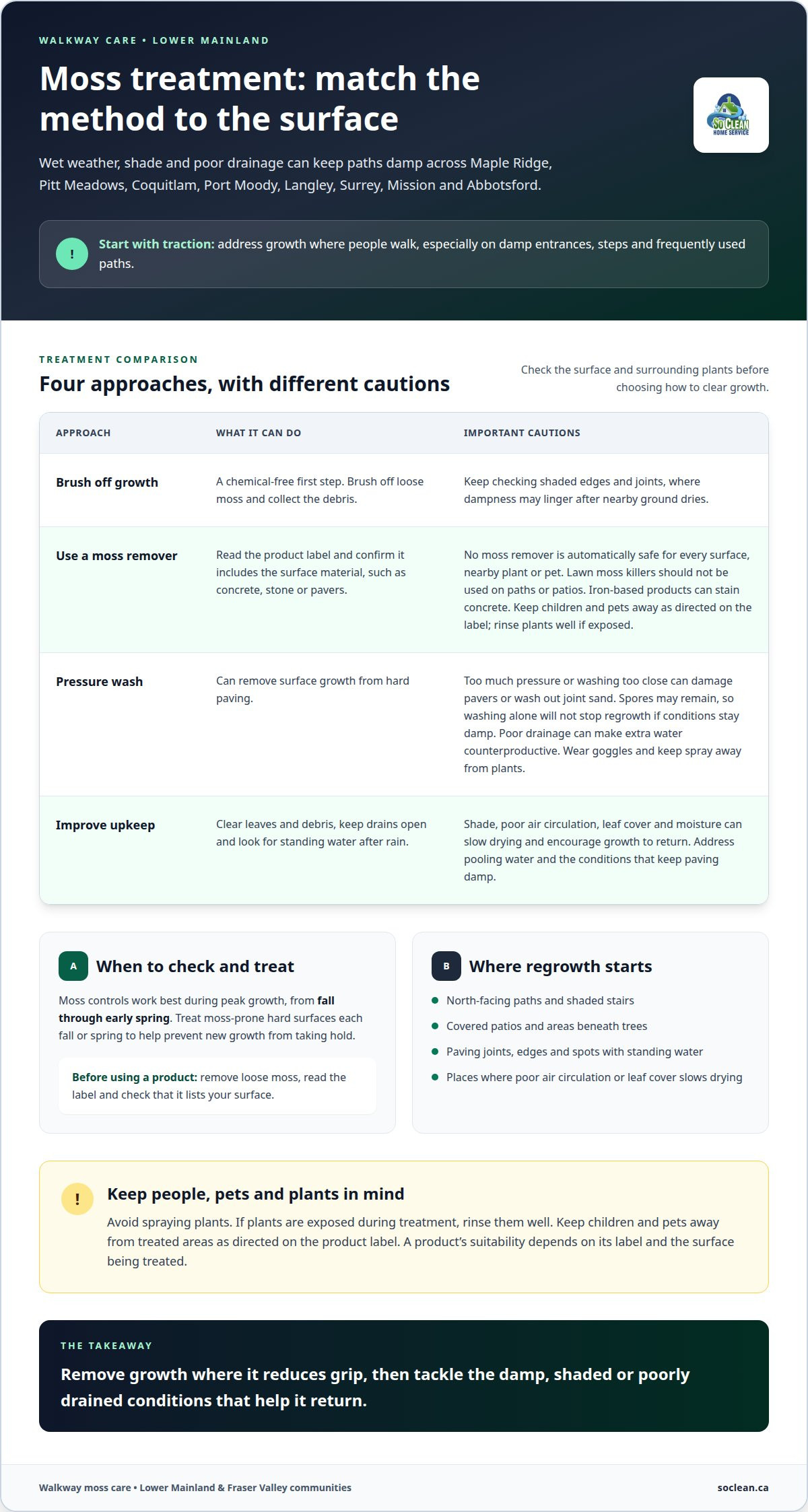
Moss controls work best during peak growth, from fall through early spring. Treat moss-prone hard surfaces each fall or spring to help prevent new growth from taking hold. Before using a product, remove loose moss and read its label. Confirm that the label includes the surface material, such as concrete, stone or pavers.
No moss remover is automatically safe for every hard surface, nearby plant or pet. Lawn moss killers shouldn’t be used on paths or patios, and iron-based products can stain concrete. Keep children and pets away from treated areas as directed on the product label. Avoid spraying plants; rinse them well if exposed. For a chemical-free first step, brush off growth and collect the debris.
Look closely before choosing a treatment: moss forms soft green patches, while algae can appear as a thin, slick film. Lichens often form crusty spots, and liverworts can spread as flat growth across damp ground. These look-alikes may all reduce grip, but their appearance can help identify where moisture persists. Check shaded paving, joints and the edges of garden beds.
A pressure washer can remove surface growth, but it can also damage pavers or wash out joint sand if used too close or at excessive pressure. It may leave spores behind, so washing alone won’t stop regrowth if conditions remain damp. Poor drainage can also make extra water counterproductive. Wear goggles when pressure washing, and keep spray away from plants. Choose an approach suited to the surface and its condition.
4. Housekeeping and walkway maintenance
In Maple Ridge, Pitt Meadows, Coquitlam, Port Moody, Langley, Surrey, Mission and Abbotsford, regular outdoor upkeep helps keep walkways clear through wet weather. Sweep leaves from sidewalks, steps and driveways before they form slick layers. Wet leaves can also conceal loose stones, uneven paving and potholes. Clear the route from the garden gate to the entrance, including the path around your home.
Use a stiff broom to brush moss and algae from hard surfaces before growth becomes established. Remove loosened material rather than leaving it beside the walking area. For moss in narrow paving cracks, a pointed weeding tool can reach where a broom cannot. Work carefully to avoid dislodging paving or spreading debris onto nearby steps.
Keep drains and channels free of leaves so rainwater can flow away instead of pooling on paths. Check where downspouts discharge and whether water collects after rain. Moss holds moisture against hard surfaces, which can contribute to deterioration and shorten the useful life of walkways, driveways and patios. Address recurring damp patches as well as visible growth.
Plan upkeep around the local growing season. Moss controls on hard surfaces are most effective during peak growth, from fall through early spring. Treat moss-prone areas each fall or spring, just before rain when moss is moist and growing. When applying a moss-control product, choose a stretch with no rain forecast for several days and follow its label. In Metro Vancouver, strata walkways may need moss and algae cleaning once a year. Without treatment and ongoing upkeep, growth can return within one or two wet seasons.
After washing, check whether drainage and shade still keep the surface damp. A second, lighter walkway-cleaning pass in spring may help properties with heavy tree cover. Consistent sweeping, drain clearing and seasonal attention make walking routes easier to maintain.
For help keeping exterior walkways and other building surfaces maintained, arrange exterior building maintenance.
So Clean Home Service: Roof Cleaning and Moss Removal
So Clean Home Service provides roof cleaning and moss removal, along with pressure washing for exterior hard surfaces. The company is licensed and insured, and its technicians complete a rigorous training period. If moss returns on a walkway despite regular upkeep, pressure washing can help remove surface growth. The right approach depends on the surface and its condition, since excessive pressure can damage pavers or wash out joint sand.
In the rainy Lower Mainland, roof and walkway growth can thrive in the same damp, shaded conditions. Roof moss can hold moisture against roofing materials, while moss on paths can reduce traction. Addressing both as part of exterior property maintenance helps tackle separate concerns around the home without treating one service as a substitute for the other.
For help with mossy exterior surfaces or roof growth, contact So Clean Home Service.
Make your next upkeep step count
Make walkway safety part of your property’s ongoing maintenance plan. Note recurring concerns and who will follow up, so they don’t get lost among other seasonal tasks. A consistent approach can help prevent slips and falls on mossy walkways over time.
If an exterior maintenance concern needs professional attention, So Clean Home Service can help you choose a practical next step.
Contact So Clean Home Service to discuss your property’s upkeep. A clear plan can make it easier to keep maintenance moving forward.
Frequently Asked Questions
Are moss treatments safe for pets and landscaping?
No moss treatment is universally safe for every pet, plant or surface. Products can contain different active ingredients and have different handling directions, so follow the label when using and storing them. If you want to avoid chemical exposure, choose a mechanical removal method instead. Consider the route pets use through the yard before selecting a treatment approach.
Do I need to get rid of algae, lichens, liverworts and mosses from hard surfaces?
Not every patch needs removal. A growth-covered stone feature beside a garden may be less urgent than paving used for regular access. Algae, lichens, liverworts and moss don’t damage the hard surface they grow on, so the decision can focus on how the area is used. Reassess surfaces when their use changes, such as when a path becomes a regular route for visitors.
How do falls happen?
A fall can happen when someone loses balance after their foot slides or catches on something. The result depends on factors such as walking speed, the person’s ability to regain balance and whether they can use a handrail. Carrying a bulky load can make recovery harder if it shifts suddenly. Paying attention to how people move through a space helps reveal less obvious risks.
How can I prevent falls due to slips and trips?
Agree on a simple reporting routine for shared walkways so residents can flag a newly noticed problem before it is forgotten. A dated note or photo can help track whether the same location needs attention after each wet spell. For a private home, make sure household members know which route to use while a repair or cleaning task is underway.
Should I use chemical controls?
Use a chemical control only when its label identifies the surface you plan to treat. Products intended for lawns may not work on paving and can leave stains. Check whether the label calls for repeat applications, since some controls don’t persist on the surface. Keep the product in its original container so its directions remain available for later handling and storage.
What if I do nothing?
Leaving growth in place doesn’t automatically damage concrete, stone or pavers. The practical concern is that an untreated patch can remain a traction problem for people using that route. Consider how often the area is used and whether its condition changes after rain or seasonal leaf fall. If use increases, reassess the patch rather than assuming its previous level of risk still applies.