
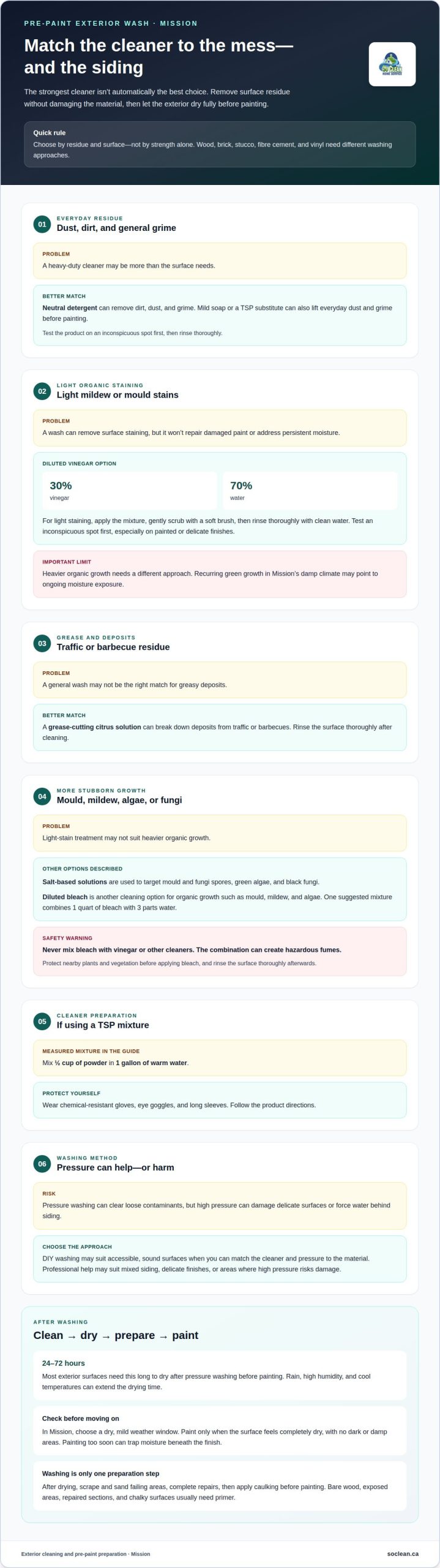
The strongest cleaner isn’t automatically the best choice for siding. For a pre-painting exterior wash in Mission, match the cleaner to the surface and the dirt: a neutral detergent can remove dust and grime, while diluted vinegar may help with light mildew stains. Pressure washing can clear loose contaminants, but high pressure can damage delicate surfaces or force water behind siding.
A clean, fully dry surface helps paint bond properly and last longer. Mission’s wet weather can extend drying time, and most exterior surfaces need at least 24 to 72 hours to dry after pressure washing before painting. Painting too soon can trap moisture beneath the finish.
This guide explains which cleaners suit common exterior messes, when diluted vinegar may help, and why the right approach depends on the siding material and condition. You’ll also learn what washing can and can’t do to prepare for painting, and when a DIY wash may be practical versus when professional pressure washing can help clean the surface safely.
Key Takeaways
- Match the cleaner and washing method to your siding so you can remove grime without harming the surface.
- Vinegar and water may help with light mildew stains, while tougher organic growth calls for a different approach.
- Plan for the exterior to dry fully before painting; washing alone won’t smooth rough areas or replace other surface preparation.
- Consider professional pressure washing when the exterior has multiple materials or needs careful cleaning before paint preparation.
Can I wash my home’s exterior myself, or should I hire a professional?
You can wash accessible, sound surfaces yourself when you can match the cleaner and pressure to the material. Professional help may suit mixed siding, delicate finishes, or areas where high pressure risks damage.
Paint adhesion and longevity
Pre-paint washing removes dirt, mildew, chalking, and loose paint that can interfere with adhesion. Paint bonds more reliably to a clean surface, which can help the finish last longer. The effect on a paint job’s lifespan depends on factors such as surface preparation, paint quality, and weather exposure. Washing may loosen failing paint, but scraping, repairs, and sanding can still be needed to prepare a stable surface.
Cleaning walls with mild soap or TSP substitutes
Mild soap or a TSP substitute can lift everyday dust and grime before painting. Test the product on an inconspicuous spot first, then rinse the area thoroughly. One TSP mixture uses 1/2 cup of powder in 1 gallon of warm water. Wear chemical-resistant gloves, eye goggles, and long sleeves when using TSP, and follow its product directions.
Exterior washing solutions
Match the cleaning solution to the residue. Neutral detergent can remove dirt, dust, and grime; a grease-cutting citrus solution can break down deposits from traffic or barbecues. Salt-based solutions are used to target mould and fungi spores, green algae, and black fungi. Wood, brick, stucco, fibre cement, and vinyl need different washing approaches, so avoid treating every surface alike.
Permits, wastewater, drying, and weather conditions
Whether permits or wastewater rules are relevant cannot be determined by cleaner choice alone; the property and how wash water is handled are relevant considerations. Most exterior surfaces need 24 to 72 hours to dry after pressure washing before painting. Rain, high humidity, and cool temperatures can extend that time. In Mission, choose a dry, mild weather window, and paint only when the surface feels completely dry with no dark or damp areas.
Using vinegar and water to remove light mould and mildew
A pre-paint exterior wash in Mission removes surface dirt, grime, mildew, and loose paint so the next preparation steps start with a cleaner surface. Diluted vinegar may help with light mildew stains; heavier organic growth needs a different approach.
For light staining, mix approximately 30% vinegar with 70% water. Apply it to the affected area, gently scrub with a soft brush, then rinse thoroughly with clean water. Try the mixture on an inconspicuous spot first, especially on a painted or delicate finish. Vinegar and water can remove light mould and mildew stains, but washing doesn’t repair damaged paint or address the source of persistent moisture.
Diluted bleach is another cleaning option for organic growth such as mould, mildew, and algae. One suggested mixture combines 1 quart of bleach with 3 parts water. Protect nearby plants and vegetation before applying it, and rinse the surface thoroughly afterwards. Never mix bleach with vinegar or other cleaners, as combining cleaning products can create hazardous fumes.
Washing removes surface contaminants, not every layer of failing paint. If paint is peeling, scraping and sanding may still be needed to leave a stable base. Rinse away cleaner and loosened debris completely, since residue on siding can interfere with later preparation. In Mission’s damp climate, recurring green growth may point to ongoing moisture exposure rather than a one-time cleaning issue.
After cleaning, let the exterior dry before repairs, primer, or paint. Mould-resistant primers and paints can help prevent mildew regrowth over time, but they don’t replace removing existing surface growth. For broader upkeep alongside a pre-paint wash, exterior building maintenance can address other exposed areas of the property.
Achieving a smoother paint finish
A pre-paint wash clears surface residue, but it doesn’t create a smooth finish by itself. Pressure washing may loosen paint that’s already failing, yet peeling edges and rough patches still need attention. For example, loose paint around a trim board can remain uneven after rinsing. Scraping and sanding help create a stable surface for the next coating.
Once the exterior has dried, sand rough areas such as raised wood grain on siding or trim. Sanding can smooth fibres lifted during washing, remove stubborn residue, and improve paint adhesion. Focus on areas that feel rough or still show flakes rather than assuming a clean-looking wall is ready for paint. Washing removes dirt; sanding addresses texture and surface irregularities.
Keep the preparation sequence in mind. Wash walls before repairs because grime can interfere with the adhesion of repair materials as well as paint. After the surface dries, scrape and sand failing areas, then complete repairs. Apply caulking after washing and drying, but before painting. This order helps prevent dirt or wash residue from being trapped beneath repairs and sealant.
Primer also contributes to the final result. Bare wood, exposed areas, repaired sections, and chalky surfaces usually need primer after washing. For example, a scraped patch on painted siding may absorb the finish differently from the surrounding coating without suitable preparation. A pre-paint exterior wash in Mission is one part of the process: clean the surface, let it dry, smooth rough spots, repair defects, and prime where needed. Washing alone won’t replace scraping, sanding, caulking, or priming.
Choosing a cleaner for exterior surfaces before painting
For a pre-painting exterior wash in Mission, choose a cleaner by matching it to the residue and exterior material, not by picking the strongest product. Dusty siding needs a different treatment from a wall marked by algae or greasy barbecue residue. The aim is to remove contaminants without damaging the surface or leaving a film behind.
First identify what needs cleaning. A neutral detergent suits general dust and grime, while a grease-cutting citrus solution can target oily deposits from traffic or barbecues. Light mildew stains may respond to diluted vinegar, but established organic growth calls for a different cleaner. Read the label for suitable surfaces, application directions, and rinsing requirements.
The siding material also guides the choice. Wood, brick, stucco, fibre cement, and vinyl respond differently to cleaners and water pressure. A product suitable for brick may harm a delicate finish. Test the cleaner on an inconspicuous area, then check for changes in colour, texture, or coating before treating a larger section.
- Dust and everyday grime: Choose a neutral detergent suited to the surface.
- Greasy residue: Use a grease-cutting cleaner for deposits such as barbecue film.
- Light mildew staining: Consider diluted vinegar and gentle scrubbing.
- Algae or heavier growth: Select a cleaner intended for organic buildup and that material.
Rinse thoroughly after applying any cleaner so residue won’t interfere with repairs or paint. Mission’s damp conditions can affect drying, so let the surface dry fully before further preparation. A pre-painting exterior wash in Mission works best when the cleaner matches both the stain and the material. If you’re planning a pre-painting exterior wash in Mission, make the surface type your first consideration.
So Clean Home Service: Pressure Washing
So Clean Home Service provides pressure washing for exterior surfaces before painting. It can help remove dirt, mildew, and other surface residue, but high pressure can damage delicate surfaces or drive water behind siding. The right approach depends on the material and its condition.
If your Mission home has several exterior materials, hard-to-reach areas, or delicate finishes, professional washing can help clean the surfaces without treating every area the same way. So Clean Home Service also provides exterior building maintenance to support upkeep beyond the walls being prepared for paint. Washing is one part of preparation; scraping, repairs, sanding, and drying may still be needed before painting.
For professional exterior pressure washing in Mission, contact So Clean Home Service.
Set up your exterior for the next step
Before work begins, plan a clear sequence for preparing and painting your home. Decide which surfaces need attention, note any areas that need repairs, and coordinate the timing so the exterior is ready for each stage. In Mission, allow for damp weather to affect outdoor work.
A practical plan helps keep cleaning, surface preparation, and painting in the right order. If you’d like help considering the exterior work involved, contact So Clean Home Service to discuss your property. With a suitable plan in place, you can move ahead with greater confidence.
Frequently Asked Questions
What to wash a house with before painting?
For a typical painted exterior, use a cleaner that removes surface film without leaving residue that could affect later paintwork. A useful check is whether the rinse water runs clear and the surface no longer feels dusty or slick. If residue remains, rinse again before proceeding. Cleaning prepares the existing finish; it doesn’t replace repairs or painting.
What preparation is needed before washing a house exterior for painting?
Before washing, identify areas that need repair and note where paint has already failed. Wash before patching, caulking, or priming, so grime doesn’t sit between the wall and those materials. After cleaning, let the surface dry, then carry out repairs and other preparation. This order helps keep wash residue from being trapped beneath new materials.
What is the best method to wash siding before exterior painting?
There isn’t one best method for every siding type. The suitable approach depends on the material, its condition, and the residue present. Glass may be flushed with fresh water during an exterior wash, but that doesn’t count as full window cleaning. Plan separate window cleaning around paint preparation so the glass isn’t left with wash residue.
Can pressure washing damage siding, stucco, or wood before painting?
Yes. High pressure can damage wood fibres, loosen siding, or force water behind exterior surfaces. The risk depends on the material and its condition, especially where boards are loose or the finish has already failed. After washing, look for newly exposed areas or changes to the surface before painting. Those spots may need additional preparation, not another pass with the washer.
What cleaners remove mildew, algae, and chalking from exterior surfaces?
Choose a cleaner for the specific residue. Light mildew staining may respond to diluted vinegar, while algae and heavier organic growth need a cleaner suited to that buildup. Chalking is the powdery residue weathered paint can leave behind; remove it before coating the surface. If the cleaned area remains powdery, it may need further preparation before paint can adhere well.
Do painters in Mission, BC include exterior washing in their quotes?
It depends on the work described in the painter’s quote. Exterior washing may be included as preparation or treated as a separate task. Review the written scope for the surfaces and preparation work covered, such as washing, scraping, repairs, and priming. In Mission, rain and humidity can also affect when a washed surface is ready for the next stage of painting.