
Blasting your exterior with maximum water force is often the fastest way to ruin your siding rather than restore it. When persistent downpours and seasonal humidity leave thick layers of green algae and dark mould across your home in Maple Ridge, Langley, or Abbotsford, booking vinyl siding pressure washing seems like the obvious solution. It is understandable to want that grime gone immediately, but you probably worry that aggressive pressure might crack thin panels, void siding warranties, or force moisture deep behind your rainscreen seams.
You can restore fresh curb appeal without risking water intrusion or costly structural damage. This guide shows you how to safely clean your vinyl siding, protect your exterior from long-term moisture exposure, and choose the correct method for your property. You will learn the technical differences between high-pressure power washing and low-pressure soft washing, see how eco-friendly cleaning agents protect your perimeter, and receive a practical checklist to evaluate licensed and insured exterior maintenance professionals.
Key Takeaways
- Understand safe vinyl siding pressure washing methods that protect interlocking seams and hidden weep holes from moisture intrusion.
- Compare gentle soft washing with high-pressure power washing to preserve manufacturer siding warranties while eliminating stubborn algae.
- Discover why persistent rain and coastal humidity across the Lower Mainland accelerate mould growth on shaded exterior walls.
- Learn essential property protection steps, such as shielding electrical fixtures and pre-wetting perimeter gardens before applying eco-friendly cleaning agents.
- Weigh the equipment demands and ladder hazards of DIY exterior cleaning against hiring licensed and insured professionals.
Understanding Vinyl Siding Pressure Washing: Risks and Safe Methods
Vinyl siding pressure washing serves as an effective way to restore curb appeal, but doing it safely requires understanding how your home is built. Many homeowners assume vinyl forms an airtight seal that can handle intense mechanical force. In reality, aggressive blasting often forces water into structural cavities, turning a simple maintenance chore into a costly repair project. Protecting your property starts with knowing how vinyl works and why gentle, controlled washing methods are the modern industry standard.
The Physical Mechanics of Vinyl Siding
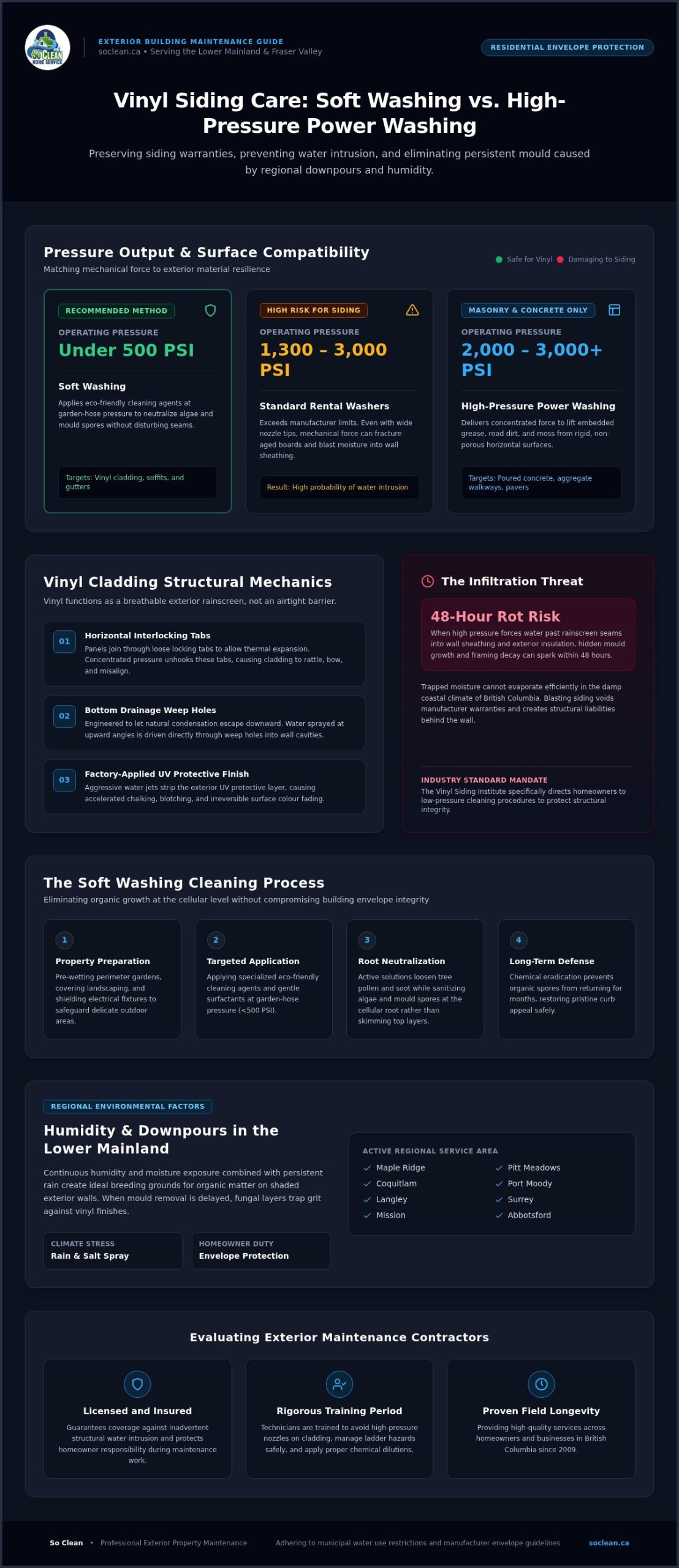
Vinyl siding operates as an exterior rainscreen rather than a sealed barrier. Panels interlock horizontally, leaving small drainage weep holes along the bottom edges that allow natural condensation to escape. Big-box retailers often market residential pressure washers without explaining these critical dynamics. Spraying water at upward angles or too close to the overlaps pushes high-pressure streams directly through the weep holes and seam joints. Once water penetrates behind the panels, it saturates wall sheathing and exterior insulation. In wet regional conditions, trapped moisture behind the siding can spark unseen mould growth and framing rot within 48 hours.
Why High Pressure Can Damage Vinyl Panels
Standard rental pressure washers generate between 1,300 and 3,000 PSI, which easily exceeds the safe limits established by siding manufacturers. Concentrated pressure creates distinct structural and aesthetic problems:
- Cracked and punctured panels: Vinyl loses flexibility as it ages under sunlight, and direct impact from high-pressure nozzles will fracture brittle boards.
- Stripped protective coatings: Aggressive water jets erode the factory-applied UV finish, resulting in permanent blotches, fading, and accelerated chalking.
- Dislodged seams: Concentrated spray easily unhooks the locking tabs between panels, causing the exterior cladding to bow, rattle in the wind, and lose its clean alignment.
To avoid these pitfalls when scheduling vinyl siding pressure washing, modern exterior building maintenance relies on low-pressure alternatives. Soft washing eliminates organic growth through targeted chemical solutions under 500 PSI, cleaning the surface without challenging the integrity of your rainscreen seams.
Soft Wash vs Power Wash: Choosing the Right Exterior Cleaning Technique
Choosing between soft washing and power washing comes down to surface resilience and the physical science of cleaning. Many DIY retail guides suggest simply swapping to a wider nozzle tip on a rental machine, but that still delivers excessive mechanical force against vinyl joints. While standard power washing relies on high output between 2,000 and 3,000 PSI, safe vinyl siding pressure washing restricts stream pressure to under 500 PSI. Relying on raw blasting strips protective layers and forces water behind siding seams, whereas matching the proper technique to the substrate preserves your exterior envelope.
- Soft washing (under 500 PSI): Uses eco-friendly cleaning agents to sanitize vinyl cladding, soffits, and gutters without dislodging joints or driving moisture past weep holes.
- Power washing (2,000 to 3,000+ PSI): Delivers concentrated mechanical force to lift embedded grease, road dirt, and moss from durable concrete and stone flatwork.
How Soft Washing Cleans Without Mechanical Force
Soft washing relies on chemistry instead of brute pressure. Specialized eco-friendly cleaning agents and gentle surfactants loosen surface grime, tree pollen, and atmospheric soot at garden-hose pressure. Rather than merely skimming off top-layer growth, these solutions neutralize algae and mould spores at the cellular root. This chemical eradication prevents organic spores from returning for months, outperforming pressure alone. As detailed in the Vinyl Siding Institute maintenance guide, siding manufacturers recommend low-pressure wash procedures because aggressive pressure voids factory warranties. Soft washing safeguards your exterior warranty while clearing discoloration caused by persistent humidity and moisture exposure.
When Traditional Pressure Washing Is Appropriate
High-pressure power washing remains the correct solution for durable, non-porous horizontal surfaces. Poured concrete driveways, exposed aggregate walkways, and granite pavers withstand 2,500 to 3,000 PSI without structural fatigue. These resilient materials collect heavy vehicle grease, automotive fluids, and ground-in mud that low-pressure rinses cannot lift. Professional technicians strictly isolate hardscape power washing from siding work, swapping out equipment calibrations between zones. When planning property upkeep, choosing exterior building maintenance from experienced crews guarantees your delicate siding and sturdy flatwork receive their appropriate wash method without cross-surface damage.
Why Lower Mainland Climate Demands Specialized Siding Care
Lower Mainland weather creates uniquely demanding conditions for home exteriors. Municipalities like Maple Ridge, Surrey, and Coquitlam experience sustained wet seasons, with parts of Greater Vancouver recording over 2,200 mm of annual rainfall. This continuous humidity and moisture exposure keeps residential cladding damp for weeks at a time. Under these conditions, seasonal vinyl siding pressure washing is not merely a cosmetic choice; it serves as a critical maintenance task that protects the building envelope, prevents structural decay, and preserves long-term property value.
Combating Algae, Lichen, and Mold Growth
Shaded north-facing walls rarely receive direct sunlight during coastal winters, creating sheltered microclimates where green algae, lichen, and dark fungi thrive. When organic matter stays wet for 24 to 48 hours, spores root into the textured grain and perimeter joints of vinyl panels. Simply rinsing walls with cold tap water leaves living spores behind, causing green film to reappear within weeks. Professional mold removal depends on applied eco-friendly cleaning agents that penetrate deep into microscopic crevices, sanitizing active growth at the cellular level so panels stay clean across multiple seasons.
Managing Rain, Wind, and Environmental Fallout
Regional airflow and geography bring distinct airborne contaminants that adhere to wet exterior walls:
- Agricultural dust and road grime: Valley wind currents carry loose soil, vehicle exhaust, and highway fallout across Langley, Abbotsford, and Mission, bonding film to damp exterior panels.
- Coastal rain/salt spray: Properties closer to Port Moody and coastal inlets contend with wind-driven marine mist that deposits mineral crusts on exterior trim and window surrounds.
- Debris runoff from blocked troughs: Autumn downpours push roof runoff, decaying pine needles, and cedar tannin over full gutters, streaking cladding below.
Homeowners can prevent heavy staining by pairing siding care with annual gutter cleaning. Clearing blockages allows rainwater to flow directly to ground drainage rather than spilling over your eaves and running down vinyl facades. By keeping cladding free from organic debris and mineral accumulation, regular vinyl siding pressure washing safeguards your home envelope against moisture retention and maintains fresh curb appeal year-round.
The Step-by-Step Professional Siding Washing Process
Executing professional vinyl siding pressure washing demands methodical execution and disciplined site management. Quality results depend just as much on property preparation as they do on cleaning equipment. While DIY guides often instruct homeowners to start spraying immediately, reputable technicians follow a disciplined sequence designed to protect sensitive plants, secure exterior electrical circuits, and clean siding panels without pushing moisture into the building envelope.
Site Preparation and Plant Protection
Work begins with a walkthrough to identify hazards and assess panel integrity. Technicians inspect the cladding for loose trim pieces, unlatched joints, and damaged caulk seals around window frames. Crews then tape off exterior electrical outlets, outdoor light sconces, security cameras, and doorbell wiring to prevent moisture from causing short circuits. Landscaping protection follows immediately:
- Pre-saturating root systems: Technicians saturate surrounding flowerbeds and soil with fresh water, filling plant root cells so they cannot absorb stray cleaning runoff.
- Protecting perimeter greenery: Delicate shrubs, Japanese maples, and decorative potted planters are misted and temporarily shielded from direct product contact.
- Continuous post-rinse watering: After applying solutions to the building, ground crews rinse vegetation a second time to dilute any airborne droplets settling on leaves.
Application and Downward Rinse Methodology
Once site protection is complete, technicians apply eco-friendly cleaning agents using dedicated low-pressure pumps operating below 500 PSI. Crews work from the bottom up during the detergent stage, an intentional technique that prevents uneven drip marks and streaking on dry siding. The sanitizing mixture dwells on the vinyl for roughly ten minutes, breaking down biological root structures, dirt, and spider nests without surface scrubbing.
Rinsing requires an entirely different angle. Technicians wash down from the roofline to the foundation, spraying at a consistent downward angle. This directional rinsing follows the natural overlap of the cladding shingles, ensuring water flows over the face of the boards instead of pushing underneath seam edges or up into weep holes. Specialized wide nozzles provide an even rinse volume that carries away detached grime while keeping wall sheathing dry. If you want thorough results without jeopardizing your home exterior, book professional pressure washing from a team trained to handle every detail safely.
Evaluating DIY vs Professional Pressure Washing for Your Home
Tackling exterior cleaning yourself might look straightforward on a weekend, but vinyl siding pressure washing involves serious equipment hazards and physical challenges. While renting a machine seems economical, managing pressurized equipment from unstable footing turns simple maintenance into a risky chore. True homeowner responsibility centres on preserving your property value without putting your personal safety or home envelope on the line.
Safety Risks and Hidden DIY Costs
Working on multi-level homes across sloped lots in Coquitlam, Mission, or Abbotsford introduces severe ladder hazards. Spray wands generate sudden backward recoil when triggered. Balancing that kickback on an extension ladder while reaching toward second-storey vinyl peaks leads to serious falls. Beyond personal injury, operational errors create expensive structural repairs. Inexperienced operators easily etch lap marks into panels, blow through window caulking, or flood interior wall cavities. Managing regional water use restrictions across Metro Vancouver and the Fraser Valley also requires specialized commercial delivery systems with automatic shut-offs, features standard consumer rentals rarely provide.
Hiring Qualified Exterior Building Maintenance Professionals
Engaging a reputable exterior building maintenance team delivers peace of mind and protects your structural investment. Working with a contractor who is licensed and insured eliminates liability risks if an accidental injury or property incident occurs during the wash. Leading providers require technicians to complete a rigorous training period, ensuring every crew member understands pressure thresholds, surface chemistry, and fall-protection standards.
Before scheduling vinyl siding pressure washing for your home, review this quick contractor evaluation checklist:
- Insurance and coverage: Can the company produce proof of active WorkSafeBC standing and commercial liability insurance?
- Dedicated equipment: Does the team use calibrated soft washing systems rather than high-pressure power washing on siding?
- Property protection: What specific steps do technicians take to tape off outdoor electrical outlets and shield perimeter gardens?
- Environmental compliance: Are all applied detergents eco-friendly and handled in compliance with local storm sewer drainage bylaws?
Protect Your Home Exterior with Safe, Proven Care
Maintaining clean curb appeal in our damp coastal climate does not mean risking structural water damage or cracked panels. Safe vinyl siding pressure washing relies on chemistry rather than mechanical force. By choosing gentle soft washing paired with eco-friendly cleaning agents, you neutralize stubborn algae and mould at the root while keeping your manufacturer warranties and building envelope completely secure.
Since 2009, So Clean Home Service has delivered dependable exterior property care across the Vancouver Lower Mainland and Fraser Valley. Our technicians complete a rigorous training period, operate specialized low-pressure equipment, and carry full licensing and insurance to give you genuine peace of mind. You don’t have to tackle dangerous ladder work or risk siding damage on your own. Request your free exterior cleaning estimate from So Clean Home Service today, and let our experienced team keep your home looking its absolute best.
Frequently Asked Questions
Can you safely pressure wash vinyl siding without damaging it?
Yes, but only when technicians lower the pressure to under 500 PSI or use dedicated soft washing techniques. Standard high-pressure power washing easily cracks older vinyl, forces water through interlocking seams, and strips factory UV coatings. Professional vinyl siding pressure washing combines low pressure with specialized eco-friendly solutions, ensuring the cladding gets thoroughly sanitized without risking structural moisture problems, voiding manufacturer warranties, or dislodging exterior trim.
What is the difference between soft washing and pressure washing on a house?
The primary difference lies in the water pressure and cleaning mechanism used on exterior surfaces. Pressure washing relies on sheer mechanical force between 2,000 and 3,000 PSI, which suits hard surfaces like concrete driveways. Soft washing operates below 500 PSI, depending on eco-friendly cleaning agents to break down algae, mould, and grime chemically. This gentle method safeguards delicate vinyl lap joints and prevents moisture penetration behind wall assemblies.
Will soft wash cleaning solutions harm my perimeter shrubs and gardens?
No, professional soft wash methods will not harm your landscaping when applied with proper protection procedures. Technicians thoroughly pre-soak surrounding soil and flowerbeds with clean water so plant root systems cannot absorb wash runoff. During the wash, crews shield delicate specimens and perform continuous post-rinsing to dilute any stray cleaning agents. This careful protocol ensures your perimeter gardens, cedar hedges, and ornamental plants remain healthy and undamaged throughout the project.
How often should vinyl siding be cleaned in the Vancouver Lower Mainland?
Most homes across Maple Ridge, Langley, and the Lower Mainland benefit from professional siding washing every one to two years. Regional humidity, heavy winter rains, and surrounding forest canopy accelerate biological growth much faster than in drier climates. Scheduling regular vinyl siding pressure washing prevents green algae and dark fungi from permanently staining vinyl profiles or penetrating behind interlocking panels, protecting your home envelope and maintaining clean curb appeal.
Why is green algae constantly growing on the north side of my house?
North-facing walls receive minimal direct sunlight, creating cool, damp environments where airborne algae spores flourish. In coastal communities like Coquitlam, Port Moody, and Abbotsford, prolonged moisture exposure keeps exterior panels wet for days after rainstorms. Without solar heat to dry the surface, microscopic spores take root along textured vinyl grain. Applying professional sanitizing solutions kills these spores at the cellular level, preventing rapid regrowth far longer than surface rinsing alone.
Can water get behind vinyl siding during exterior building washing?
Water can easily penetrate behind vinyl siding if an operator uses high pressure or sprays at upward angles. Vinyl panels are designed as a loose-fitting rainscreen with bottom weep holes, not an airtight barrier. Upward spray pushes water directly through these drainage openings and horizontal joints, soaking interior sheathing. Professional technicians always spray downwards with wide, low-pressure nozzles to follow panel overlaps, keeping structural cavities and insulation completely dry.
Should gutter cleaning be done before or after washing house siding?
Gutter cleaning should always be completed before washing your siding. Clearing full gutters first prevents overflowing rainwater, decomposing roof moss, and dark sludge from spilling down freshly sanitized walls. Once roof troughs and downspouts flow freely, crews can wash siding from top to bottom, removing any residual splashes or streaks. Combining both tasks during a single maintenance visit ensures your property drainage and exterior cladding remain in peak condition.