
What if the next Mission downpour exposes a gutter section no one knew had been missed? A single cleanout can remove visible debris, but strata gutter maintenance Mission properties need works best as a coordinated plan covering every building, downspout and hard-to-reach section. With wet autumn weather putting drainage systems to work, clear responsibilities and a defined service scope can help councils address blockages before they become bigger concerns.
Organizing exterior work across multiple buildings takes planning. Residents need clear notice, access requirements must be considered, and the completed work should be easy to review. This checklist explains what to include in a maintenance plan, how to coordinate service across a Mission property, and what to look for when reviewing gutter cleaning and repair work.
So Clean Home Service is locally owned and has served Mission and the Lower Mainland since 2009. Its licensed and insured team brings high-rise experience and rigorous technician training to exterior maintenance. Use this checklist to prepare for wet weather and keep your strata’s drainage needs on track.
Key Takeaways
- Plan strata gutter maintenance Mission properties as coordinated work across buildings, roof edges and drainage points.
- Use visible debris, humidity and moisture exposure, and signs of overflow to guide inspections instead of relying on an arbitrary schedule.
- Define the service scope by noting downspouts, access needs and visible gutter damage before work begins.
- Coordinate building access and resident communication so property managers can share useful timing and site instructions.
- Learn how gutter cleaning and repairs can support a practical maintenance plan for a Mission strata property.
Why Mission strata need planned gutter maintenance
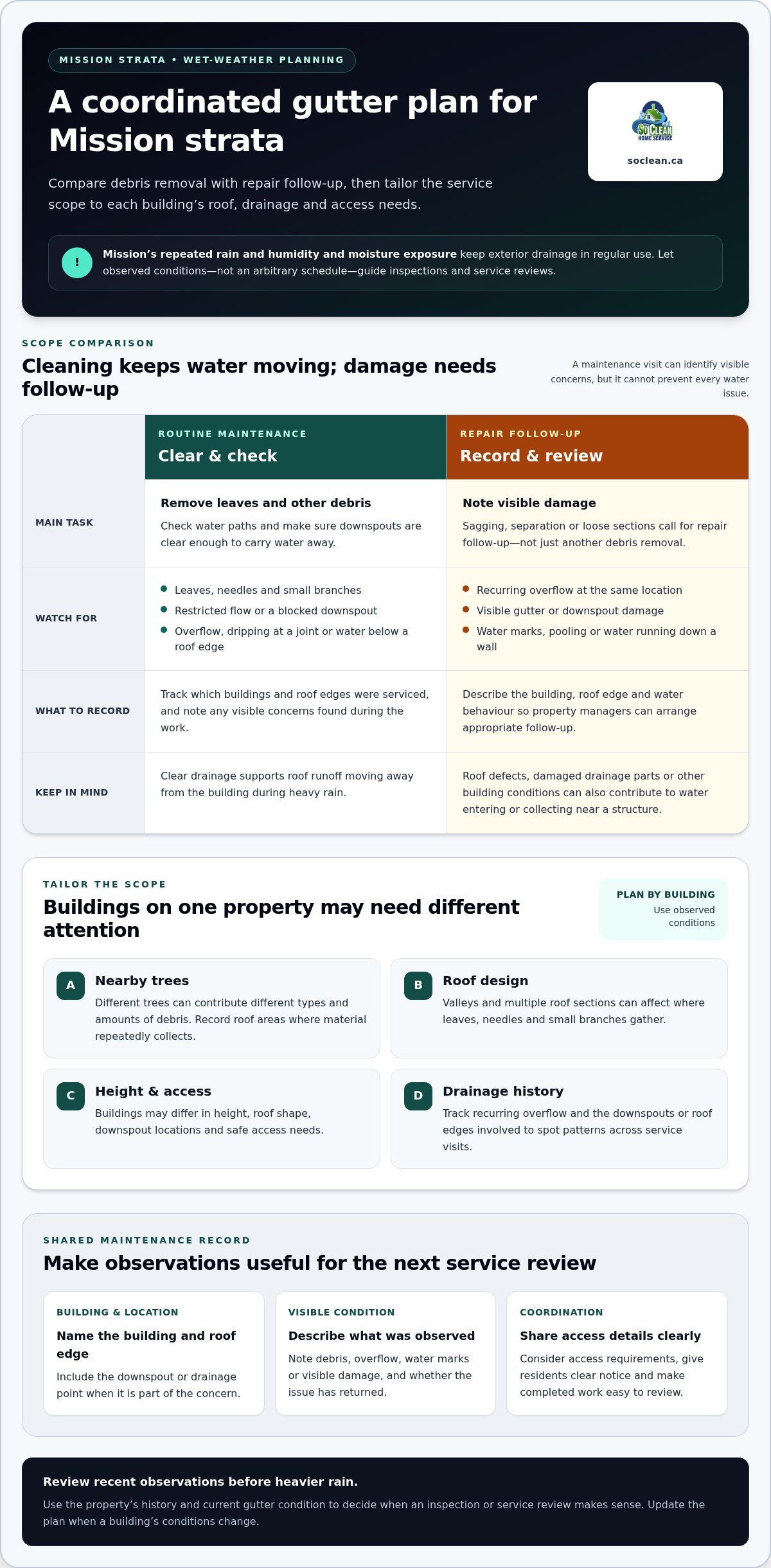
For a strata property, gutter maintenance means removing debris, checking drainage and monitoring visible conditions across the buildings it serves. It goes beyond a quick cleanout: remove leaves and other debris, check water paths, and note visible changes such as sagging or separation. A Rain gutter collects water from the roof and directs it away from the building, so clear gutters and downspouts help keep that route open.
Blocked or overflowing gutters can send water over the edge towards exterior walls, entrances and areas around foundations. On a shared property, a problem at one building may affect nearby walkways or raise concerns about common areas. Planned strata gutter maintenance Mission councils can coordinate helps them track which buildings were serviced and which visible concerns need follow-up.
How gutter maintenance supports shared buildings
During heavy rain, gutters and downspouts need to carry roof runoff away rather than let it spill over the eaves. Debris can restrict the flow. A blockage may show up as overflow, dripping at a joint or water collecting below a roof edge. Clearing the route and checking for visible concerns helps the strata address avoidable drainage problems across the property.
Maintenance reduces the chance that accumulated debris will obstruct drainage, but it cannot prevent every water issue. Roof defects, damaged drainage components or other building conditions may also contribute to water entering or collecting near a structure. A maintenance visit can identify visible concerns, while damaged gutters or downspouts need repair, not just another debris removal.
Why Mission’s local conditions matter
Repeated rain and humidity and moisture exposure keep exterior drainage systems in regular use and can leave debris wet and heavy. In Mission, plan around local wet-weather conditions by noting what collects on each roofline and how water moves through the drainage system. Councils can use observed debris, building layout and visible gutter condition to guide inspections rather than rely on an unsupported fixed schedule.
Downpours can make an existing blockage easier to spot. Water spilling over an edge, pooling near an entrance or running down a wall may signal that a gutter or downspout needs attention. Record the location and share a clear description so property managers can arrange the right follow-up.
Keep routine work distinct from repairs. A practical maintenance plan can include:
- Removing leaves and other debris from gutters.
- Checking that downspouts are clear enough to carry water away.
- Noting visible damage, loose sections or recurring overflow for repair follow-up.
This distinction gives councils a clearer record of completed cleaning and outstanding repairs. It also helps residents and property managers understand whether a reported issue calls for debris removal, a closer condition review or repair work. Clear drainage supports the property during wet weather, while prompt attention to visible damage helps keep maintenance decisions organized.
How Mission weather shapes a strata gutter maintenance plan
Rain does not affect every roofline in the same way. Leaves, needles and small branches can collect in gutters, while repeated humidity and moisture exposure keeps drainage components wet between rain events. During downpours, restricted flow may become easier to spot as water spills over an edge or a downspout fails to carry it away. A tailored approach to strata gutter maintenance Mission properties need starts by observing how each building handles these conditions, not by imposing the same schedule on every roof.
A strata gutter maintenance plan is recurring cleaning and condition monitoring matched to each building’s debris, drainage, roof design and access needs. This gives councils a practical basis for planning service and adjusting the scope as conditions change.
What can change gutter maintenance needs?
Nearby trees can contribute different types and amounts of debris, while roof features such as valleys or multiple roof sections can affect where material gathers. Buildings on the same property may also differ in height, roof shape, downspout locations and safe access. Treating every building as identical can leave a debris-prone section or less accessible drainage point out of the plan.
Between service visits, property managers can keep a simple record of what residents or site staff observe. Note the building and roof edge, the visible debris, and any recurring overflow or water marks. These details help the council identify patterns and describe the work area clearly when planning the next visit.
- Record roof areas where debris repeatedly collects.
- Note which buildings have different height or access needs.
- Track recurring overflow and the downspouts or roof edges involved.
Planning around wet weather in Mission
Before periods of heavier rain, councils can review recent observations and prioritize areas with recurring debris or visible drainage concerns. There is no need to guess at an ideal cleaning frequency. Use the property’s history and current condition to decide when an inspection or service review makes sense, then update the plan if a building’s conditions change.
A shared maintenance record makes those decisions more useful. Keep notes by building, including when a concern appeared, what was observed and whether it returned after service. A recurring issue at one roof edge may call for closer attention there, while another building with little visible debris may need a different review. The Government of British Columbia’s Strata Property Act and Maintenance Responsibilities guidance can also help councils understand the broader maintenance context for strata property.
Clear notes make it easier to plan gutter cleaning and identify where gutter repairs may be needed. So Clean Home Service provides both for Mission strata properties. Councils can explore gutter cleaning and repair services as part of a building-specific maintenance plan.
Strata gutter maintenance checklist: assess the service scope
A clear scope helps a strata council see which parts of the property need attention and review what the service covered. Before arranging gutter cleaning, map the buildings and drainage routes rather than describing the job simply as “clean the gutters.” Include downspouts and access needs, then record visible concerns so cleaning and any required repairs remain distinct.
Before strata gutter service, identify every building, roof edge, gutter, downspout, access requirement and visible concern in the work scope.
What should a strata gutter service cover?
Start with a building-by-building list. Identify the roof sections and gutter runs to be included, then note where each downspout carries water. Gutter cleaning removes debris from roof gutters, but a useful scope also states which drainage routes need attention. This helps prevent an overlooked roof edge or downspout from being left out simply because it is less visible from the ground.
- Identify each building. Use building names or another consistent site label so council members and the service team refer to the same locations.
- Mark roof edges and gutter runs. Record the sections that need cleaning, including less visible rooflines or sections with recurring debris.
- List downspouts and drainage routes. Note their locations and include a plan to assess whether water can pass through them. A clear gutter alone does not show whether a connected downspout is flowing freely.
- Describe access needs. Flag building height, restricted areas or other site conditions that affect safe access. Leave work at roof edges to people equipped to work safely at those locations. Do not ask residents to reach roof edges.
- Record visible concerns. Before service, note overflow, detached sections, apparent damage or water marks, along with the relevant building and location.
How to assess visible condition and completed work
Separate cleaning from repair in the scope. Cleaning removes debris; it does not reattach a loose gutter or repair a damaged downspout. If the inspection or service identifies damage, record it as a repair item so the council can track it separately from completed cleaning. This keeps the maintenance record clear and avoids assuming a blockage was the only issue.
After the work, compare service notes with the building list and agreed scope. Notes can identify the areas addressed and flag concerns that need follow-up. Images, where provided, can help council members review visible conditions without relying on memory or a general completion note.
- Match service notes to the buildings and sections in the original scope.
- Record gutter or downspout concerns separately from debris removal.
- Keep follow-up items tied to the relevant building location for the next review.
For strata gutter maintenance Mission properties, this record-based approach helps councils see what was included, what was observed and what still needs attention. A defined scope makes the work easier to coordinate and the results easier to review.
Coordinate Mission strata gutter work with residents and property managers
Good coordination helps exterior work proceed across the property with fewer surprises. For strata gutter maintenance Mission councils should align building locations, site access and resident communication before the work is scheduled. A property manager can keep those details together, share relevant instructions and record what was completed afterward.
Prepare the property and communicate the schedule
Start with a shared list of buildings and agreed work areas. Identify access points, site-specific arrangements and locations that may need extra coordination. Then give residents a clear update about the planned exterior work and its timing. Explain which buildings are involved and share relevant access instructions, without promising an exact duration if it has not been established.
- Confirm the site plan. Match building names and locations to the work scope so everyone refers to the same areas.
- Review access arrangements. Note entry points and practical considerations for reaching the work areas. Share these details with the service team and property manager.
- Communicate with residents. Provide the schedule and relevant instructions through the strata’s usual communication channels. Clear information helps residents understand what to expect around their building.
- Keep updates consistent. If the planned timing or affected area changes, make sure the property manager and residents receive the same updated information.
These steps are especially useful on multi-building sites, where work at one building may not happen at the same time as work elsewhere. A consistent building list also helps avoid confusion when residents report an issue or ask whether a particular area is included.
Keep useful maintenance records
After service, record what happened in a format the council and property manager can refer to later. Keep the notes factual and tied to building locations. This creates a clearer maintenance history and helps distinguish completed cleaning from concerns that need separate gutter repairs.
- Service date and the buildings addressed.
- Roof edges, gutters and downspouts included in the work.
- Any observed overflow, detached sections or apparent damage.
- Follow-up items, including repair needs and the relevant location.
When notes identify where runoff or drainage concerns occur, the property manager can connect gutter observations with wider foundation-care considerations described in the Mission gutter cleaning and foundation care guide. Keep the property’s service notes specific to the buildings and work completed on site.
For coordinated exterior maintenance in Mission, arrange strata gutter cleaning and repairs with So Clean.
Choose So Clean for strata gutter maintenance in Mission
Mission strata properties need exterior maintenance planned around multiple buildings, rooflines and resident access. So Clean Home Service provides gutter cleaning and gutter repairs for residential and strata properties in Mission and across the Lower Mainland. Cleaning removes debris from roof gutters; repairs address damaged gutter sections or downspouts. Keeping these tasks distinct helps councils organize the work and record follow-up needs.
A local exterior maintenance team for strata properties
So Clean’s exterior property maintenance includes gutter cleaning and repairs, helping strata councils address routine debris removal and visible drainage damage. Property managers can prepare a building list, note access conditions and describe known concerns such as recurring overflow. That information helps shape the service discussion around the property’s specific layout rather than treating every building as identical.
So Clean Home Service serves Mission and other communities across the service area, including Maple Ridge, Pitt Meadows, Coquitlam, Port Moody, Langley, Surrey, Abbotsford and Mission. Gutter work can also sit within a broader exterior maintenance plan. Councils coordinating several types of upkeep across buildings can use the practical considerations in So Clean’s Coquitlam exterior building maintenance property guide to think through how site needs fit together.
Plan the next step for your Mission property
Before discussing strata gutter maintenance Mission, gather details that make the property’s needs clear:
- Building names or locations and the roof areas that need attention.
- Access conditions, including high-rise sections or site-specific coordination needs.
- Known drainage concerns, such as visible debris, overflow or damaged gutter sections.
- Resident communication or scheduling considerations managed by the property manager.
A concise site summary gives the discussion a practical starting point and helps distinguish cleaning needs from repair concerns. Discuss strata gutter maintenance with So Clean and share the buildings, access conditions and drainage concerns your council has identified.
Turn your maintenance notes into the next plan
Use each service record to make the next planning discussion more specific. Comparing new observations with earlier notes can help the council spot changing conditions and decide which locations need attention first. Over time, this gives property managers a clearer basis for setting priorities across the site.
For strata gutter maintenance Mission councils can bring building locations, access considerations and drainage concerns together before planning the next step. A focused discussion can turn those details into a workable approach for the property.
Discuss strata gutter maintenance with So Clean and take the next step with a clear plan.
Frequently Asked Questions
Can gutter guards eliminate the need for strata gutter maintenance?
No. Gutter guards may reduce the debris that enters a gutter, but leaves, needles and smaller material can still collect on or around them and affect water flow. Include guarded sections in the property’s inspection plan, especially where residents notice overflow during rain. Record which buildings have guards and any recurring blockage concerns so the council can assess those areas rather than assume the guards eliminate the need for upkeep.
Can gutter cleaning prevent water from entering a strata building’s basement?
Gutter cleaning can help keep roof drainage clear, but it cannot guarantee that water will not enter a basement. Water may also relate to foundation openings, drainage beyond the downspout or other building issues. If a resident reports basement water, record when and where it appeared and notify the property manager promptly. Treat gutter service as one part of investigating the concern, not as a complete diagnosis.
Does gutter cleaning include gutter repairs?
Not necessarily. Gutter cleaning removes debris, while gutter repairs address damage such as a detached section or a compromised downspout. A service visit may reveal a repair concern, but the council should track it separately from the cleaning work. For example, note the building and location of a loose section, then record whether repair work has been arranged and completed. This keeps maintenance records clear for future reviews.
How should residents report a gutter overflow between planned service visits?
Residents should report it to the property manager or the strata’s usual maintenance contact as soon as practical. Include the building, the side or area where water spills over, and whether the overflow occurs during rain or continues afterward. A photo taken safely from the ground can help identify the location. Residents should avoid climbing ladders or approaching roof edges to investigate; leave access to elevated areas to trained workers.
Can roof moss removal be arranged alongside strata gutter maintenance?
Yes. So Clean Home Service provides roof cleaning and moss removal as well as gutter services, so a council can discuss both as part of its exterior maintenance planning. Identify roofs where moss is a concern and separately note gutters or downspouts that need attention. This gives the property manager a practical way to coordinate the requested work without treating roof cleaning as gutter repair.
What should a strata council record after gutter maintenance?
Record the service date, buildings and areas addressed, and any concerns that remain open. For useful follow-up, connect new observations to earlier resident reports, such as recurring overflow at the same entrance or downspout. If the council keeps service notes or images, label them by building and location so future council members can understand the history. These records can guide the next strata gutter maintenance Mission review without assuming every building needs identical attention.