
Roof moss is more than a cosmetic issue: it can compromise roofing materials, hold moisture against the roof and lift shingles. Safe roof moss removal in Coquitlam helps protect shingles and reduce the risk of moisture-related damage. Removing moss can also improve a home’s curb appeal.
It makes sense to want moss removed without damaging the roof. In Coquitlam’s damp conditions, shade and moisture can encourage moss growth, while rough removal methods may harm shingles. A safe approach accounts for the roof’s material and condition and removes growth carefully.
This article explains why roof moss removal matters, what safe removal involves and which factors shape a Coquitlam estimate. You’ll also learn how regular roof care and clear pricing details can help you make a practical decision for your home.
Key Takeaways
- Learn how moss can hold moisture against roofing materials, lift shingles and affect roof condition over time.
- See how careful de-mossing differs from roof washing and why the roof material matters when choosing an approach.
- Understand how clearing visible moss can improve curb appeal and support routine roof care.
- Find out which roof and site conditions shape a Coquitlam removal estimate, rather than relying on a one-size-fits-all figure.
- Discover how roof cleaning and gutter cleaning can support exterior maintenance around your home.
Can moss removal enhance the curb appeal of my property?
Yes. Removing visible moss can give a roof a cleaner, more even appearance and may help avoid replacing a roof 5-10 years early. Roof cleaning every 2-5 years is described as an alternative to premature replacement. In Coquitlam, the right timing depends on moss growth, shade and the roof’s condition.
A single bylaw answer does not fit every roof-cleaning project. The scope matters, especially when work goes beyond cleaning to include repairs or alterations.
A clean roof can improve curb appeal by making the home look better maintained from the street. It can also support a more consistent appearance when moss has spread across visible slopes or gathered near the eaves. For homeowners preparing to sell, a moss-covered roof may distract from the home’s exterior; careful cleaning can help restore its appearance and may support resale value.
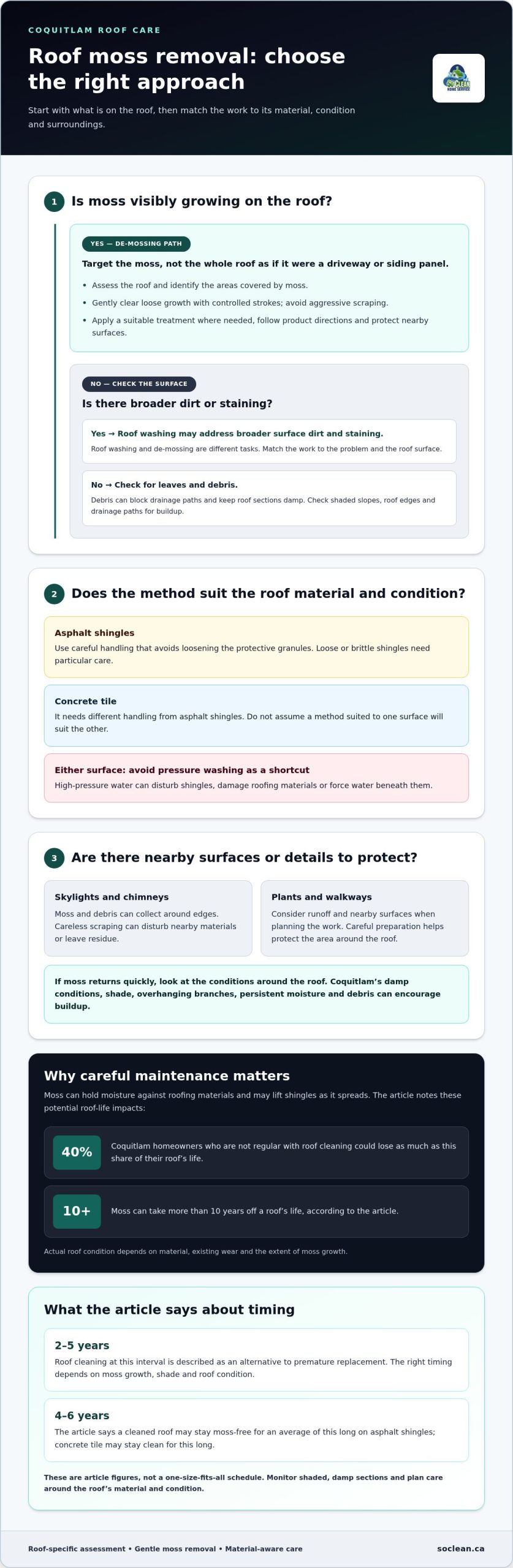
Choose a cleaning approach that suits the roofing material and its condition. Asphalt shingles and concrete tile need different handling, so a method suited to one surface should not automatically be used on another. The goal is to remove moss without scraping away protective granules, loosening tiles or forcing water beneath roofing materials. Aggressive brushing and high-pressure washing can damage a roof, even if it looks cleaner afterward.
Coquitlam’s damp conditions and shaded roof areas can encourage moss growth. Overhanging branches, persistent moisture and debris can make some sections more prone to buildup. Check shaded slopes, roof edges and drainage paths for moss. If it returns quickly, look at the surrounding conditions rather than relying on harsher cleaning.
The same care applies to residential and commercial roofs. A house may need attention on a prominent front-facing slope, while a commercial building may have broad roof sections visible from nearby roads or parking areas. In either case, consider the roof’s material, access and overall condition before planning cleaning.
Chimneys and skylights also need careful attention. Moss and debris can collect around their edges, where careless scraping may disturb nearby materials or leave residue behind. A thorough cleaning plan accounts for these details instead of treating the roof as one uninterrupted surface. With suitable maintenance, a cleaned Coquitlam roof may stay moss-free for an average of 4-6 years on asphalt shingles; concrete tile may stay clean for 4-6 years.
What Exactly Is Roof De-Mossing?
Roof de-mossing targets moss growing on roofing, while roof washing addresses broader surface dirt and staining. A roof, for example, may have moss along shaded shingle edges as well as dust or leaf marks across other areas. Match the work to the problem: moss removal should not treat every roof like a siding panel or driveway.
On asphalt shingles, careful moss removal avoids force that could loosen protective granules. The process begins by assessing the roof, identifying moss-covered areas and gently clearing loose growth. A suitable treatment may then be applied where needed, following product directions and protecting nearby surfaces. This is different from pressure washing, which uses high-pressure water to remove dirt and residue. That force can disturb shingles or drive water beneath them.
Leaves and other debris matter, too. They can collect alongside moss, block drainage paths and keep roof sections damp. Clearing debris from the work area exposes the surface and makes it easier to see whether moss remains. Around roof edges, valleys and joints, careful handling is preferable to scraping quickly across a slope. Each pass should suit the roofing material.
De-mossing is not the same as making a roof look freshly washed. Moss treatment targets growth, and visible changes may take time as treated moss loosens or weathers away. A roof with dirt but no moss may need a different cleaning plan. One with moss and fragile shingles needs particular care. The roof’s material, existing wear and amount of growth all affect the approach.
Soft washing siding is a separate task. It uses low pressure and eco-friendly cleaning agents for delicate exterior surfaces. This approach can suit siding, where high pressure may damage panels or force water behind them. Roof de-mossing still requires a roof-specific assessment; a siding method should not simply be transferred to asphalt shingles or tiles.
Consider the area around the roof, too. A home with skylights, plants below the eaves and a paved walkway needs a plan for runoff and nearby surfaces. Careful preparation helps protect these areas while addressing moss. In Coquitlam, damp, shaded roof sections may need closer monitoring than exposed slopes. Note where growth returns, check for leaf buildup, and plan maintenance according to the roof’s condition rather than using pressure washing as a shortcut.
Why is moss removal important for roofs?
Moss can hold water against roofing materials and, as it spreads, may lift shingles and expose vulnerable areas to moisture. Coquitlam’s damp conditions can encourage growth, especially on shaded roof sections. Regular roof maintenance helps identify moss before it covers a wider area.
Roof life is another reason to act. Coquitlam homeowners who are not regular with roof cleaning could lose as much as 40% of their roof’s life. Moss can take over 10 years off a roof’s life. These figures underline why maintenance matters, but the actual condition depends on the roofing material, existing wear and extent of growth.
Careful treatment starts with assessing the roof and identifying moss-covered areas. Manual removal uses controlled, gentle strokes to loosen growth without aggressively scraping shingles. A suitable low-pressure treatment can then be applied for the roof surface. Pressure washing can force water beneath shingles or damage roofing materials, so high-pressure cleaning is not a substitute for careful de-mossing.
The treatment should account for the roof’s age, slope and visible wear. Loose or brittle shingles, for example, need more care than a sound surface with a small patch of moss. Chimney edges, valleys and roof penetrations also need attention, since vigorous scraping can disturb nearby materials. A deliberate process addresses growth while limiting unnecessary contact with the roof.
Use only a moss-killing product labelled for the specific roofing material, and follow its directions for application and runoff. No product is automatically safe for every roof, pet or garden. Protect pets and garden areas according to the product label, including any precautions stated for after treatment.
Prevention starts with regular observation. Annual roof maintenance can catch early moss growth before it spreads. Look for shaded patches, check for overhanging branches that keep areas damp, and note whether leaves collect in roof valleys. Zinc or copper strips can discourage moss growth when rainwater runs over them. Their placement and compatibility with the roof surface matter.
After treatment, note any remaining moss or newly exposed roof damage. Moss can weaken roofing and contribute to moisture buildup, so removing growth supports routine roof care. In Coquitlam, a maintenance record of treated areas and visible changes can help guide future inspections and cleaning.
Moss-related moisture retention and shingle damage
Moss can hold moisture against roofing and interfere with shingles. In Coquitlam’s damp conditions, check affected areas for lifted edges, worn surfaces and signs of water entry.
Shingle Damage from Moss
Moss can grow beneath shingle edges and lift them from their normal position. Raised or uneven shingles may leave gaps where rainwater can reach the layers below. From the ground, look for irregular lines, dark patches or moss concentrated along roof edges. Don’t pull at shingles to inspect them; close examination belongs in a roof assessment.
Potential Roof Damage from Moss
Moisture trapped by moss can contribute to roofing deterioration and water damage. After rain, watch for ceiling stains, damp patches in an attic or water marks near roof penetrations. These signs can have different causes, but they warrant attention alongside visible moss. Record where they appear, such as below a roof valley or beside a chimney.
Damage can develop in stages. Moss holds water against the roof; lifted shingles can then expose underlying areas to rain. Repeated humidity and moisture exposure can accelerate deterioration of building materials. In a Coquitlam home, a shaded roof slope may stay damp longer than a section exposed to sun and airflow. This can help explain why growth and wear appear unevenly.
Look for changes over time rather than relying on a single observation. From a safe position on the ground, note whether shingles appear curled, displaced or missing. Inside, check ceilings and accessible attic areas for new stains or dampness after rainfall. A stain beneath a skylight, for example, identifies an area for closer assessment, but does not prove moss caused a leak.
Cleaning should not add damage. Forceful scraping can disturb shingle surfaces, while pressure washing may push water beneath roofing or loosen material. A careful assessment distinguishes moss from existing wear and identifies vulnerable edges before cleaning begins. If shingles already look loose or damaged, address the roof’s condition rather than treating it as a simple cleaning task.
After moss removal, keep monitoring the same roof sections. Check whether shingles lie flat and whether signs of moisture return after rain. If a ceiling mark grows or a damp area persists, record its location and timing for a qualified roof assessment. Prompt attention to leaks can limit further water exposure and help clarify whether repairs are needed.
Coquitlam’s wet weather makes drainage part of roof care. Water should flow off the roof through its drainage paths, not remain trapped around moss or debris. Note where runoff slows, where moss returns and whether staining appears below a roof edge. These observations can connect visible roof changes with possible moisture pathways without assuming every stain has the same cause.
Coquitlam roof moss removal estimates
A useful roof assessment considers the whole roof, not just one mossy patch. In Coquitlam, note visible wear, drainage concerns and areas that are difficult to inspect from the ground. This context helps define the work required and clarify the next maintenance steps for the property owner.
Ask for a written description of the proposed work before it begins. It should identify the roof sections to be treated, the cleaning approach and how the work area will be managed. For example, note whether the plan includes roof edges, valleys, skylights and cleanup around the home. A clear scope helps prevent misunderstandings about which areas will receive attention.
When comparing roof cleaning plans, review the written details rather than relying on a brief verbal description. Look for a clear account of the roof areas covered, the process, access considerations and any visible damage outside the cleaning scope. Cleaning and repairs address different needs, so make sure the plan distinguishes between them.
To evaluate a roof moss removal plan in Coquitlam, review the written scope, insurance information and experience with your roof type. Check that the plan identifies the areas to be treated, access arrangements and any work excluded from the scope.
For permit questions, distinguish routine surface cleaning from structural repairs or roof alterations. These are different scopes of work. Identify what the project involves and consult the City of Coquitlam’s applicable requirements before proceeding.
Before an assessment, record the roof material if known, visible moss locations and any signs of wear. Ground-level photos can show where concerns appear without requiring you to climb onto the roof. Include nearby skylights, chimneys or unusual roof sections in your notes. These details help focus the assessment on the property’s layout.
Coquitlam’s weather and site conditions also affect planning. Note shaded sections, overhanging trees and places where debris gathers after rain. If parts of the roof are hard to see from the ground, note which areas are obscured. This context helps explain the proposed work before it is scheduled.
For help assessing roof moss and the work it requires, contact So Clean Home Service to discuss your property.
So Clean Home Service: Gutter Cleaning
So Clean Home Service provides gutter cleaning to help keep roof drainage clear after moss removal. Coquitlam’s downpours can carry leaves and debris into gutters, slowing water flow and causing overflow near the roofline. Clearing this buildup supports routine exterior maintenance and helps reveal visible gutter issues.
Choose roof cleaning and moss removal when growth covers shingles or returns in shaded areas. Pairing roof care with gutter cleaning can address moss and debris affecting drainage in one maintenance plan. Pressure washing and window cleaning are also available for other exterior surfaces, using methods suited to each area.
For a property-specific estimate, share the roof material, moss locations and any drainage concerns. Contact So Clean Home Service or visit soclean.ca to discuss roof and gutter cleaning.
Make roof care part of your maintenance plan
Keep a brief roof-care record. Note which slopes stay shaded, where moss appears and whether leaves collect near drainage points. After cleaning, record what changed and check those areas during routine exterior inspections. This provides a clearer basis for planning maintenance before visible growth spreads. For safe roof moss removal in Coquitlam, a plan that considers the roof’s material and condition keeps the work focused on the property’s needs.
Coquitlam’s wet weather makes regular attention worthwhile, especially where trees shade the roof or debris gathers. You don’t need to climb onto the roof to keep useful notes. Ground-level observations and photos can help track changes over time and support an informed discussion about next steps.
For help planning roof care, contact So Clean Home Service. A clear maintenance plan can make it easier to care for your home with confidence.
Frequently Asked Questions
How often should I schedule roof moss removal?
Arrange removal when new moss patches spread across a roof slope or collect near the eaves. If growth returns in the same place, note nearby shade, overhanging branches and leaf buildup. This record can help distinguish recurring site conditions from isolated growth. Coquitlam homeowners can compare dated ground-level photos without climbing onto the roof.
Can you clean roof edges and drip edges?
Roof edges and drip edges can be included in a cleaning plan. Mention visible buildup along the eaves and identify sections that are difficult to see from the ground. Drip edges meet the roof perimeter, so careful work matters. Point out loose- or bent-looking sections, too, since cleaning and repairing roof components are different tasks.
Can you clean roofs with skylights?
Yes, roofs with skylights can be cleaned. Before work, identify each skylight and clear access to the surrounding area where practical. Secure windows and doors, and move outdoor furniture away from the work zone. Protect delicate plants below the eaves. These preparations help keep nearby household items and surfaces clear of the work area.
What about Safety?
Stay off the roof during cleaning, especially in Coquitlam’s wet weather. Moss and rain can make walking surfaces slippery, and loose roofing can create additional hazards. From the ground, note affected areas and share photos rather than using a ladder to inspect them. Keep children and pets away from the work zone while roof maintenance is underway.
What is the safest way to remove moss from a roof in Coquitlam?
Use a roof-specific process suited to the material and its condition. Avoid high-pressure water on asphalt shingles, as it can damage the surface. Before work, identify fragile areas, skylights and nearby plants, then plan access and runoff management. Coquitlam’s damp weather can affect roof conditions, so a slippery surface should not be treated as safe to work on.
What roof moss removal methods should homeowners avoid?
Avoid high-pressure cleaning on asphalt shingles and forceful scraping that can disturb roofing. Don’t climb onto a wet roof to remove moss yourself. Before any treatment, read its label and follow directions for the roof surface, runoff and nearby plants. If a method requires walking over fragile or visibly damaged sections, leave the assessment and work to a trained roof cleaner.
How much does roof moss removal cost in Coquitlam?
So Clean Home Service provides roof cleaning and moss removal in Coquitlam. To discuss your roof, describe its material, the affected areas and any access concerns. Ground-level photos can help show where moss is visible. Mention skylights, chimneys or other features that shape the work area, so the conversation can focus on your property’s specific maintenance needs.
What do Coquitlam roof cleaning companies charge per square foot?
A square-foot figure alone does not describe a roof’s condition or the work involved. For a useful discussion, note the roof material, visible moss, access limitations and any sections obscured from ground view. Keep property plans or clear exterior photos available if you have them. These details help explain the roof layout and which areas you want addressed.