
Professional holiday light hanging can help reduce installation risks, but it cannot make roofline work or outdoor electrical connections risk-free. Hiring an experienced installer means you can hand off the installation, not stop paying attention to weather, equipment condition, or the display once it is up. A careful plan and safe work practices matter, while the home and conditions still affect the job.
In the Lower Mainland, rain and damp conditions are part of holiday display planning. For homes in Maple Ridge, Pitt Meadows, Coquitlam, Port Moody, Langley, Surrey, Mission, and Abbotsford, moisture exposure can affect outdoor lighting and connections, so product instructions matter. This article separates practical safety guidance from sweeping promises. You’ll learn what professional installation can and cannot do, how to weigh ladder and roofline risks, and what an experienced service brings to the work. So Clean Home Service has served the Lower Mainland since 2009, with licensed and insured technicians who complete a rigorous training period.
Key Takeaways
- Professional holiday light hanging can help manage installation risks, but it cannot remove risks from weather, equipment, or later maintenance.
- Consider roof access, display complexity, available time, and your comfort working at height when choosing between DIY and professional installation.
- Plan for Lower Mainland rain by considering timing and access, then observe the display after installation for visible changes that need attention.
- So Clean Home Service provides seasonal Christmas light installations for homes and strata properties across its local service area.
Professional holiday light hanging: what the common safety myths get wrong
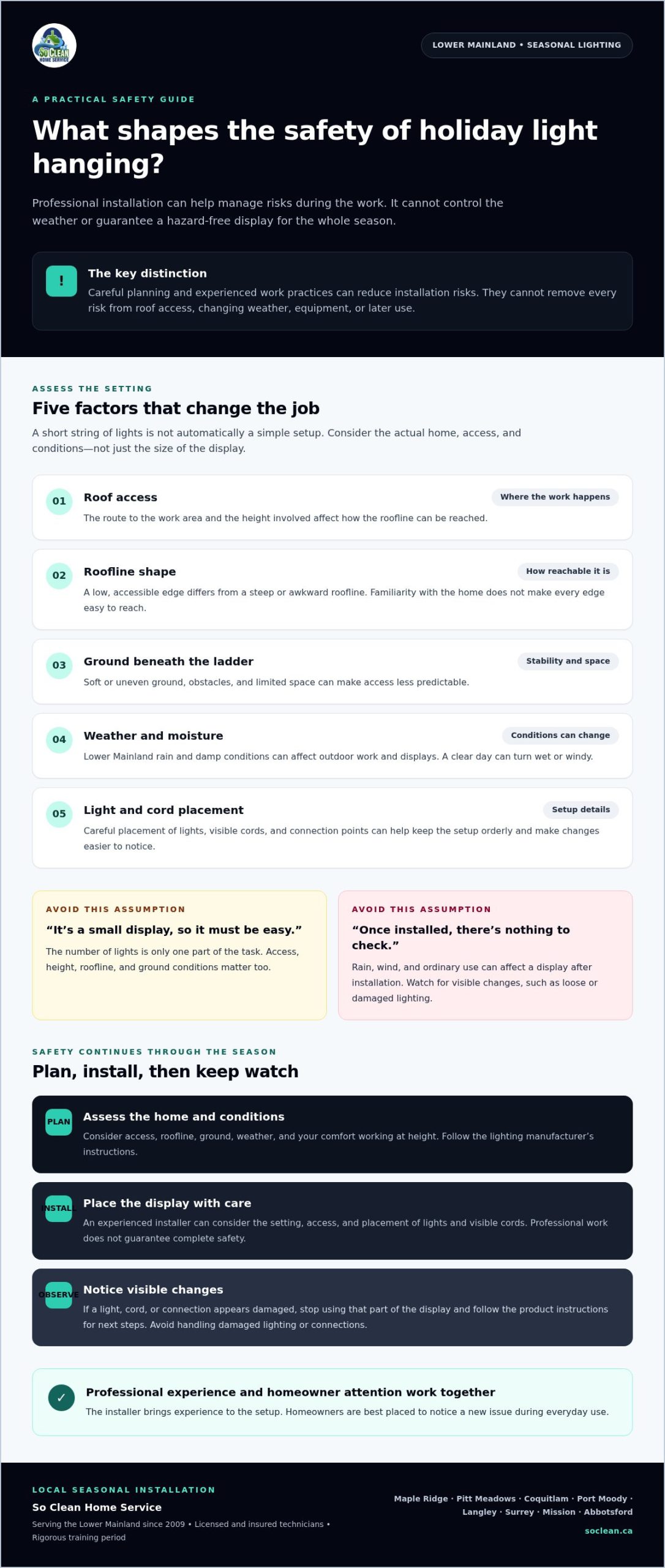
Professional hanging brings planning and experienced work practices to a display, but it cannot control every factor once the lights are up. Equipment can develop problems, weather can change, and homeowners still need to notice visible changes during the season. The key distinction is between reducing installation risks and guaranteeing a completely safe display.
That distinction matters in the Lower Mainland, where rain and damp conditions can affect outdoor work and displays. A familiar home does not make every roofline easy to reach, and a short string of lights does not necessarily mean the setup is straightforward. Professional holiday light hanging can reduce specific risks through careful planning and work practices, but it cannot guarantee complete safety.
Myth: a small display is always a simple, safe DIY job
The number of lights is only one part of the task. A short run along a low, accessible edge is different from placing lights near a steep or awkward roofline. Height, the route to the work area, roofline shape, and the ground beneath a ladder all affect the job. Soft or uneven ground, obstacles, and limited space can make access less predictable.
Familiarity does not remove those variables. Knowing where the front steps or patio are will not prevent a ladder from shifting, and a clear day can turn wet or windy. The risks differ from one home to another. Decide based on the actual access and conditions, not just the size of the decoration.
Displays also vary in the kinds of lights and arrangements they use. For background on the range and history of seasonal lighting, see History and types of Christmas lights. Whatever the style, assess the access demands of the home separately.
Myth: professional installation means there is nothing to check later
Installation is one stage of a display’s life, not a guarantee for the whole season. Rain, wind, and ordinary use can affect lights and visible connection points after the work is complete. A display that looked in order on installation day may need attention if something shifts, hangs loose, or appears damaged.
Follow the lighting manufacturer’s instructions for use and care. If you notice a visible problem, do not ignore it or assume the original installation will prevent it from worsening. Avoid handling damaged lighting or connections, and follow the product instructions for next steps. Professional work can help manage installation risks, but it cannot promise a hazard-free season or replace homeowner attention afterward.
A measured approach avoids both alarm and false reassurance. Consider access, roofline, and conditions before deciding how to proceed, then keep an eye on the display as Lower Mainland weather changes.
How professional holiday light hanging can reduce installation hazards
Professional holiday light hanging is planned installation work, not a promise that every risk disappears. Its value is a considered approach to the home, the access needed, and where lights and visible cords will sit. Planning can help manage hazards during installation, especially when a roofline or access point calls for extra care.
Installation safety depends on access, roofline shape, ground conditions, weather, and the placement of lights and cords. A technician can consider these factors before and during the work rather than treating every home as the same task. Guidance from the CDC Workplace Fall Statistics and Prevention resource also shows why fall hazards deserve attention in work settings. It does not mean every installation carries the same risk, but it supports planning carefully when working at height.
Careful placement matters beyond access. Considering visible cords and connection points can help keep the setup orderly and make changes easier to notice later. These practices cannot control the weather after installation or replace attention to the display during the season.
What an experienced installer brings to the work
Experience helps an installer recognize how a home’s height, roofline, and access points affect the work. So Clean Home Service technicians complete a rigorous training period, supporting thoughtful planning and attention to detail. So Clean Home Service is licensed and insured. These credentials are part of the company’s professional practices, not a promise that an incident can never happen or that a particular outcome is guaranteed.
For residential and strata properties, a planned installation can help homeowners avoid access tasks that feel beyond their comfort or ability. The work has a clear focus: assess the setting, place the display with care, and consider visible cords and connections without claiming that every hazard can be removed.
Why safe use still matters after the lights are hung
Once the display is in place, follow the lighting manufacturer’s instructions for use and care. If a light, cord, or connection appears damaged, stop using that part of the display and follow the product instructions for next steps. Do not assume the installation remains unchanged throughout the season. Rain, wind, and ordinary use can affect outdoor displays over time, so watch for visible changes.
Professional installation and homeowner attention work together. The installer brings experience to the setup; the homeowner is best placed to notice a new issue during everyday use. For Lower Mainland homeowners and strata properties planning a seasonal display, So Clean Home Service’s Christmas light installations offer a local option grounded in careful work, without promising a hazard-free season.
DIY or professional holiday light hanging: what should guide your decision?
Choosing between a DIY display and professional help depends less on how festive you want your home to look and more on what the installation involves. Consider the height and shape of the area, how easy it is to reach, how involved the display will be, how much time you have, and whether you are comfortable working at height. A modest display in a stable, accessible location is different from reaching an elevated roofline.
Use these factors to make a practical decision, not as a scorecard. One difficult access point can matter more than several easy ones.
| Factor | DIY may suit | Professional help may suit |
|---|---|---|
| Access | Lights can be placed from a stable, easy-to-reach area. | The plan involves an elevated roofline or difficult access. |
| Display | The layout is modest and straightforward. | The display has several areas or needs careful coordination. |
| Time | You have time to prepare and work at a comfortable pace. | You would rather have experienced help handle the installation work. |
| Comfort | You are comfortable with the access involved and conditions are suitable. | You feel uneasy about ladder work or conditions make access difficult. |
When a homeowner may prefer a simple DIY display
A ground-level or otherwise easy-to-reach display may suit a homeowner who can work from a stable location without stretching or climbing to reach the placement area. Choose lighting suitable for its intended use, and follow the manufacturer’s instructions for installation and care. If rain, wind, slippery footing, or another condition makes access feel unsafe, postpone the work. There is no need to force the schedule.
Keep the plan within your comfort level. A simple arrangement can still look welcoming, and choosing a modest display is a practical way to decorate while limiting the access work you take on.
When professional hanging may make more sense
Professional holiday light hanging may be a better fit if the display involves an elevated roofline, awkward access, several areas to coordinate, or more time than you can set aside. It can also suit homeowners who are not comfortable with ladder work. Experienced help reduces the installation work you need to take on, while you remain responsible for following product instructions and noticing visible problems after installation.
For ideas on planning a display that suits a local home, explore these holiday lighting services and display ideas in Maple Ridge. Whether you choose DIY or professional help, let access, conditions, time, and comfort guide your decision.
Plan holiday light hanging around Lower Mainland rain and moisture
Rain is a regular part of planning outdoor displays in Maple Ridge, Pitt Meadows, Coquitlam, Port Moody, Langley, Surrey, Mission, and Abbotsford. Damp conditions can change how safe it is to reach a roofline, and exposure continues after installation. Wet conditions deserve attention because they can affect both access during installation and the display’s condition afterward.
Humidity and moisture exposure means ongoing contact with water vapour and liquid water. Over time, this exposure can contribute to building material deterioration, but it does not tell you whether a particular light or connection is suitable for wet conditions. Follow the manufacturer’s instructions for the products being used. No installation plan can guarantee that weather will have no effect.
Choose a suitable time and check conditions
Do not do ladder work in the rain or when the ground or other surfaces are slippery. Check conditions before starting, and postpone if access or footing feels unsafe. A dry start does not ensure conditions will stay the same, so leave enough time to stop if the weather changes. Professional holiday light hanging also needs to account for the day’s conditions, not just the preferred display schedule.
A simple planning sequence can help:
- Review the access route and the areas where the lights will go.
- Check current conditions before anyone begins work at height.
- Follow the lighting manufacturer’s instructions for installation and use.
- After installation, observe the display from a safe location and watch for visible changes.
This approach does not require a specific date or a perfect forecast. It gives you a practical reason to pause if the ground is slick, rain begins, or the setup looks different than expected. Changing weather can affect access during the work and the condition of an outdoor display later.
Think beyond installation day
During the display period, make occasional visual checks from a safe location. Look for obvious changes, such as lights or cords that appear damaged or out of place. Do not climb up to investigate if reaching the area would be unsafe. If lights, cords, or connections appear damaged, stop using the affected display and follow the product manufacturer’s guidance.
Keep the instructions available so you can refer to them if a concern comes up. Do not assume a display remains unchanged simply because it was installed with care. Local rain and ongoing humidity and moisture exposure make observation a sensible part of seasonal upkeep, not a reason to panic.
For more Lower Mainland planning advice, see this Lower Mainland Christmas light installation guide. If you would prefer experienced help planning and installing a seasonal display, book Christmas light installation with So Clean Home Service.
What to expect from So Clean Home Service’s professional holiday light hanging
So Clean Home Service provides seasonal Christmas light installations for residential and strata properties in Maple Ridge, Pitt Meadows, Coquitlam, Port Moody, Langley, Surrey, Mission, and Abbotsford. The service suits property owners and strata representatives planning a seasonal display. The work is planned around the home or property rather than treated as a one-size-fits-all task.
Professional holiday light hanging is installation work, not a promise that every hazard disappears. Homeowners should continue to follow product instructions and keep an eye on their display during the season. This sets realistic expectations: installation support for the display, alongside ongoing attention from the people who live in or manage the property.
A local service grounded in experience and careful work
Homes and strata properties differ in layout, access, and the areas residents want to decorate. A useful starting point is to consider the property’s features and the intended display, then plan the work accordingly. So Clean Home Service focuses on high-quality service and careful attention to each property. Every installation is different, and no particular result can be guaranteed.
Local conditions also shape seasonal planning. In the Lower Mainland, rain can affect outdoor work and the display after installation, so installation is only one part of responsible seasonal lighting. Product instructions and homeowner observation remain relevant throughout the display period.
For strata properties, the display also sits within a shared residential setting. A considered plan can keep the work suited to the property and its residents. Homeowners can decide which areas they want lit and what kind of display makes sense for their home, without taking on installation tasks that feel uncomfortable.
Take a practical next step for your holiday display
Professional help may suit you if you are concerned about access, short on time, or would rather not take on elevated work. It lets you hand off the installation while keeping your display plans and ongoing product care in view.
If you are planning in Langley, the Christmas light installers in Langley planning guide offers local context. To plan a seasonal installation for your home or strata property, explore professional holiday light hanging with So Clean Home Service.
Make a display plan that fits your home
Before arranging your holiday display, decide what you want it to add to your home. A focused plan can help you choose which areas to decorate and whether the access involved feels manageable. Think about the view from the street, the parts of the property you want to highlight, and how much installation work you are comfortable taking on.
That gives you a useful starting point for deciding whether to keep the project modest or seek help with elevated or harder-to-reach areas. Professional holiday light hanging can support a well-planned display while leaving you in control of the look and choices that suit your property.
For a dependable local option, explore Christmas light installation with So Clean Home Service. Plan your seasonal display with So Clean Home Service and leave the installation to a local team serving the Lower Mainland.
Frequently Asked Questions
Is professional holiday light hanging safer than doing it yourself?
It can be a safer choice if the job involves repeated repositioning, reaching around corners, or accessing areas you cannot comfortably see and reach from one position. A small number of lights does not necessarily mean little work. Think about the movements the installation requires, not only the size of the display. If those movements feel awkward or uncertain, hiring an installer can reduce the physical work you take on.
Can holiday lights be installed when it is raining?
Wait for suitable conditions before installing an outdoor display. Rain can make the work area harder to manage and affect visibility as you position lights. Check the product instructions for limits on installation or use in wet conditions, and do not treat permission to use a product outdoors as permission to install it in every kind of weather. Postponing is preferable to rushing the task.
Do professional holiday light installers check the lights after installation?
A check when the work is complete can only reflect the display at that moment. It cannot predict changes caused by later weather or use. After installation, continue to follow the manufacturer’s instructions and observe the display from a safe location during the season. If anything appears damaged or out of place, follow the product guidance and do not climb to investigate an unsafe area.
Are LED holiday lights safer to use outdoors?
LED lights are not automatically suitable for outdoor use just because of their technology. Suitability depends on the specific product, its stated use, and its condition. Compare the information on the packaging with where you intend to place the lights. Choose products specifically identified for the intended setting rather than relying on the LED label as a safety indicator.
How can I tell whether holiday lights are suitable for outdoor use?
Look for an explicit outdoor-use statement on the product packaging or instructions. Check that the information applies to the exact string you are using, especially if you have kept lights from previous seasons or have several different sets. Keep the packaging or product information accessible while planning the display. If you cannot establish that a set is intended for outdoor use, do not place it outside based on its appearance alone.
What should I do if holiday lights stop working or look damaged?
If a set stops working but shows no visible damage, use only the troubleshooting steps provided by its manufacturer. Do not improvise repairs or combine parts from different sets unless the instructions specifically direct you to do so. If you see damage, discontinue use of the affected lights and avoid touching the damaged area. For a display that is difficult to reach, do not climb up to investigate. Keep clear and address it through safe means.