
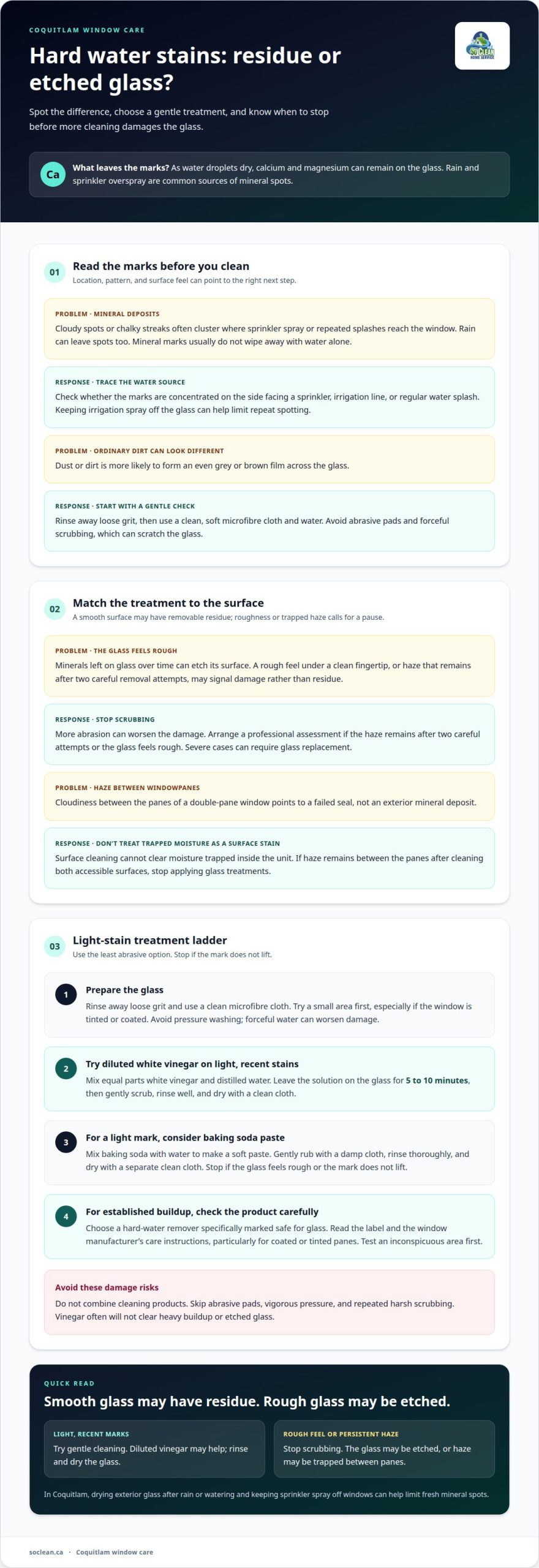
Yes, hard water stains can become permanent if mineral deposits remain on glass long enough to etch its surface. For hard water stain removal from windows in Coquitlam, white vinegar can help with light, recent stains: leave it on the glass for 5 to 10 minutes, then gently scrub, rinse and dry. Heavy buildup or etched glass usually won’t respond to vinegar alone.
It’s frustrating when regular window washing leaves cloudy spots or chalky streaks behind. These marks may look like dirt, but mineral deposits usually won’t come off with water alone, and aggressive scrubbing can damage the glass.
This guide explains how to distinguish surface stains from etched glass, how to try mild cleaning methods safely, and when to stop a DIY attempt. You’ll also learn how rain and sprinkler overspray in Coquitlam can leave mineral deposits on windows, and how regular care can help limit their return.
Key Takeaways
- Look at where the marks appear: mineral spots often cluster where sprinkler spray reaches the glass, unlike an even film of dust or dirt.
- Check for a rough feel or haze between windowpanes, clues that the issue may be etched glass or a failed seal rather than a surface deposit.
- Choose a mild cleaning approach for light residue, and stop if repeated attempts leave the haze unchanged to avoid damaging the glass.
- Reduce repeat spotting by keeping irrigation spray off windows and drying exterior glass after rain or watering.
Can Hard Water Stains Be Permanent on Glass?
Yes. When droplets dry on glass, hard water can leave calcium and magnesium deposits. Over time, these minerals may bond to the surface and permanently etch it.
Use a clean, soft microfibre cloth and water for gentle cleaning. Avoid abrasive pads and forceful scrubbing, which can scratch the glass.
Arrange a professional assessment if haze remains after two careful removal attempts or the glass feels rough. Long-term mineral staining exposed to sun for a full season or more may need professional-grade treatment.
- Trace the water source. In Coquitlam, sprinkler overspray is a leading cause of white haze on ground-floor windows. Check whether marks cluster on the side facing a sprinkler, irrigation line or repeated water splash. Rain can leave spots too, especially when water dries on the glass.
- Look at the stain pattern. Hard water marks often show as cloudy spots or chalky streaks concentrated near water exposure. Regular dust or dirt is more likely to form an even grey or brown film. Mineral deposits also tend not to wipe away with water alone, unlike loose dirt.
- Start with gentle cleaning. Standard window-cleaning solutions can remove surface dirt, but they don’t dissolve mineral deposits. For light marks, use a mild treatment rather than scrubbing harder. Vinegar may help with fresh stains, while established buildup can need a glass-safe mineral remover. Follow the next treatment steps carefully.
- Stop if the glass may be etched. Mineral deposits left on glass over time can damage its surface. A rough feel under a clean fingertip or haze that remains after two attempts can signal etching, not removable residue. More abrasion may worsen the damage; severe cases can require glass replacement.
Distinguishing surface stains from etched glass
Check whether the cloudy mark is on the surface or has damaged the glass. This distinction helps guide your next step and prevent further scratching.
-
Assess Stains for Surface Etching
Inspect the glass in daylight, then gently feel the affected area with a clean fingertip. A rough feel may suggest that the glass has been etched, while a smooth surface may indicate residue that can still be cleaned. How long a stain has been present can help distinguish a surface stain from etched glass. If haze remains after two attempts, stop scrubbing, as further abrasion can worsen permanent damage.
-
Choose a Glass-Safe Remover
Read the product label and choose a commercial hard-water remover specifically marked safe for glass. Check the window manufacturer’s care instructions too, especially if the pane is coated or tinted. A remover safe for plain glass may not suit every surface. Test a small, inconspicuous area first, and avoid abrasive pads or vigorous pressure that could scratch the pane.
- Check where the haze is before trying to restore the view. Cloudiness between the panes of a double-pane window points to a failed seal, not an exterior mineral deposit. Surface cleaning cannot clear moisture trapped inside the unit. If haze remains between the panes after cleaning both accessible surfaces, stop applying glass treatments; the problem needs a different remedy.
- Protect clean glass by reducing repeated water exposure. Glass sealants or coatings can help limit future mineral staining when they suit the window’s surface. Keep gutters and drainage paths maintained so water does not repeatedly spill or pool near windows. For persistent exterior residue, professional window cleaning can address the glass without relying on increasingly aggressive DIY scrubbing.
Milder stain-removal solutions
Start with the least abrasive treatment suited to the mark. In Coquitlam, rain and sprinkler droplets can leave mineral residue as they dry, but light deposits may respond to household methods.
- Prepare the glass and cleaning tools. Rinse away loose grit before rubbing, then use a clean microfibre cloth. Grit trapped beneath a cloth can scratch glass during cleaning. Work on a small area first, especially if the window has a tint or coating. Avoid pressure washing: forceful water can worsen damage instead of removing mineral stains.
- Try a baking soda paste on a light mark. Mix baking soda with water until it forms a soft paste. Gently rub the paste over the stain with a damp cloth, using light pressure. Rinse the glass thoroughly, then dry it with a separate clean cloth. Stop if the surface feels rough or the mark does not lift; stronger scrubbing can harm the glass.
- Use vinegar only for light buildup. White vinegar can help loosen fresh mineral residue, but it often fails on heavy deposits or etched glass. Apply it gently and rinse the window well after treatment. Don’t combine cleaning products. If the mark remains after a careful attempt, move to a glass-safe remover rather than increasing pressure or repeating harsh scrubbing.
- Match the treatment to the stain. Established deposits may need a mild acidic solution formulated for glass, followed by a pure-water rinse. Read the label and check compatibility with any glass coating before applying it. A regular window-cleaning solution may restore clarity by removing surface dirt, yet leave mineral buildup in place. In Coquitlam’s wet climate, drying glass after sprinkler spray can also limit fresh spots.
Vinegar and distilled-water treatment for light stains
White vinegar or a baking soda paste may help with light mineral deposits. For a vinegar treatment, mix equal parts white vinegar and distilled water, then rinse and dry the glass.
-
Prepare the Vinegar and Distilled Water Treatment
Mix equal parts white vinegar and distilled water in a clean container. This diluted solution may suit light to moderate residue, especially fresh spots only a few weeks old. Use a clean microfibre cloth, not a rough pad. Before treating the pane, remove loose grit and check the manufacturer’s care instructions for any tint or coating.
-
Treat Light Mineral Stains
Dampen the cloth with the mixture and apply it to the marked area. Let the solution sit for 5 to 10 minutes, then gently rub the glass. Don’t let the liquid dry on the pane or run onto window frames. Rinse the glass thoroughly with clean water, then dry it with a soft, lint-free cloth.
- Inspect the window after drying. If faint spots remain, repeat the gentle treatment once rather than increasing pressure. Avoid blades, abrasive pads, and forceful scrubbing, which can scratch glass. Vinegar may work on light surface stains, but often cannot remove heavy buildup or restore glass etched by mineral deposits.
- For a separate mild method, mix baking soda and water into a soft paste. Gently rub it over a small stain with a damp cloth, then rinse and dry the pane. Keep the paste off coated surfaces unless the window’s care instructions allow it. Never mix baking soda, vinegar, or other cleaners.
- Prevent fresh residue by adjusting sprinklers so they don’t spray windows. After irrigation or heavy rain, dry the glass before droplets leave new deposits. If light cleaning doesn’t clear the glass, arrange professional window cleaning rather than escalating to harsh methods.
So Clean Home Service: Gutter Cleaning
So Clean Home Service provides Gutter Cleaning to help maintain clear drainage around your Coquitlam home. In wet weather, blocked or poorly draining gutters can contribute to water spilling near exterior windows, so keeping them clear supports routine property maintenance.
For surface residue, So Clean Home Service’s Window Cleaning can refresh accessible exterior glass. It won’t reverse permanent etching or fix cloudiness between double-pane glass, so identifying the problem first helps set realistic expectations. If sprinkler overspray is causing fresh marks, adjust the spray direction as part of your prevention routine.
Choose Gutter Cleaning when debris affects water flow, or Window Cleaning when exterior glass needs attention. Contact So Clean Home Service to discuss the maintenance your property needs.
Plan your next window-care step
Use your windows’ condition to guide the next step in your exterior maintenance plan. If the glass stays hazy after gentle cleaning, avoid moving on to harsher methods. A careful assessment can help distinguish a cleaning issue from damage that cleaning cannot reverse.
For hard water stain removal from windows in Coquitlam, focus on protecting the glass while addressing the source of repeat spotting. So Clean Home Service also provides Roof Cleaning and Moss Removal and Pressure Washing for other exterior maintenance needs. Planning these tasks together can help you care for your property’s exterior as a whole.
Discuss your exterior maintenance needs with So Clean Home Service and choose a practical next step for your home.
Frequently Asked Questions
How often should windows be cleaned to prevent stains?
Set a cleaning schedule based on how quickly each window gets marked, rather than treating every pane alike. South-facing glass, sheltered panes, and windows beside frequently used outdoor areas can collect different residues. Note when marks return and adjust the next cleaning date accordingly. This helps you spot patterns before heavy buildup forms.
How do you remove hard water stains from windows safely?
For hard water stain removal from windows in Coquitlam, work when the glass is cool and out of direct sun. Rinse your cloth between passes so loosened grit doesn’t drag across the pane. Use a separate, clean cloth for the glass and nearby frames. If the window has a special finish, follow its care instructions before applying a cleaning solution.
Can vinegar or lemon juice remove hard water stains from windows?
Vinegar may help with light mineral marks, while lemon juice isn’t a purpose-made glass cleaner. Juice can leave pulp or sticky residue on the pane and frame, making it a poor substitute for a controlled cleaning solution. Don’t combine acidic household ingredients with other cleaners. Rinse the surrounding frame if any solution splashes onto it.
How do you remove stubborn or etched water stains from glass?
Inspect the pane from several viewing angles to see whether the mark changes with the light. If stubborn staining persists, don’t move on to blades, abrasive pads, or harder scrubbing. Severe etching can permanently alter the glass, and household cleaning won’t restore the damaged surface. A glass professional can assess the damage and explain whether restoration or replacement is appropriate.
Does Coquitlam tap water cause hard water stains on windows?
Tap water can leave mineral marks if it splashes onto glass and dries, but that doesn’t prove it caused a particular stain. In Coquitlam, note where droplets reach the window, such as from indoor washing, a hose, or outdoor watering. This can help distinguish household splashes from other water exposure without assuming the tap is responsible.
How can you prevent hard water spots from returning on windows?
For hard water stain removal from windows in Coquitlam, start prevention by identifying the water source around each pane. Check whether routine outdoor tasks splash water onto the glass, then change the task or its direction to keep droplets away. During your next exterior check, note which windows spot first. This makes it easier to focus maintenance where it can have the greatest effect.