
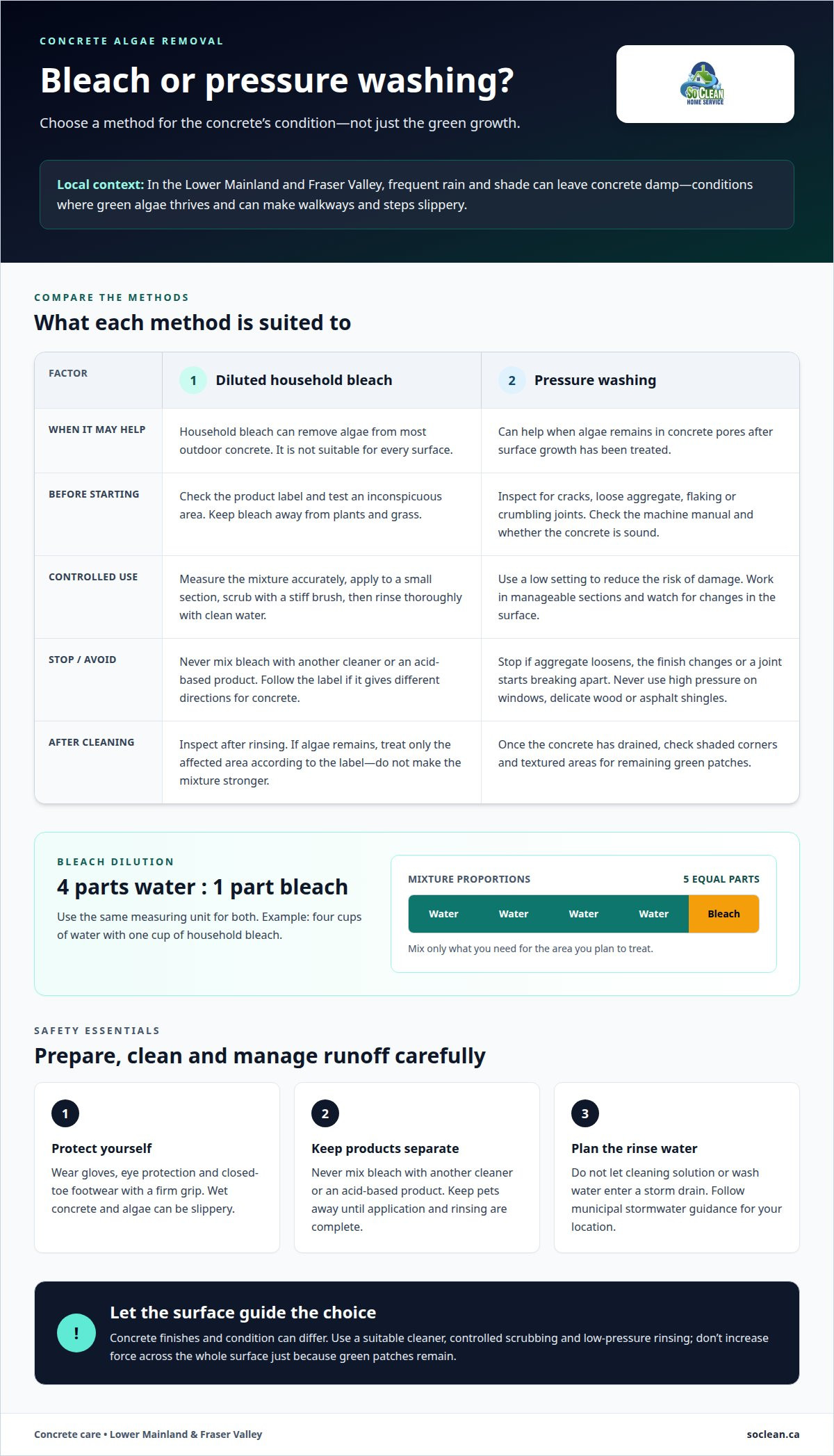
Bleach can remove algae from most outdoor concrete, but it isn’t suitable for every surface. To learn how to safely remove algae from concrete, dilute household bleach with four parts water, keep it away from plants and grass, and never mix it with another cleaner or an acid-based product. For concrete that needs rinsing after scrubbing, use a pressure washer on a low setting to reduce the risk of surface damage.
Green algae thrives in damp, shady spots and can make walkways and steps slippery. In the Lower Mainland and Fraser Valley, frequent rain and shade can leave concrete damp. Choose a cleaning method that suits the surface, not just the visible growth.
This guide covers the supplies and protective equipment to prepare, when bleach may be appropriate, and how to dilute it safely. It also explains when oxygen bleach or careful pressure washing may be a better fit, plus simple ways to help keep algae from returning.
Key Takeaways
- Prepare suitable protective equipment and keep cleaning products separate to avoid hazardous chemical reactions.
- Choose bleach based on the concrete and surrounding plants, and test an inconspicuous area before treating the full surface.
- Use careful scrubbing and controlled pressure washing to clear algae without unnecessarily stressing the concrete.
- Reduce repeat growth by addressing shade and moisture, and consider professional pressure washing for persistent algae.
Cleaning supplies and protective equipment
Gather your equipment before starting so you can apply cleaner carefully and manage runoff. Choose products and tools for the specific concrete or tile, rather than judging by the green appearance alone.
Choose a cleaner for concrete and tiles
Read the product label to confirm the cleaner suits the surface and algae staining. For tile, follow the stated dilution and application directions, since finishes and grout can respond differently from plain concrete. Use only what you need for the work area, and keep the original container nearby to refer to its instructions.
Check cleaner safety around plants, pets, and drains
Follow the label’s precautions for applying the cleaner. Keep pets away until application and rinsing are complete. Do not let cleaning solution or wash water enter a storm drain. Follow municipal stormwater guidance for your location, as local directions are the practical reference for outdoor runoff.
- Prepare the area. Move furniture, toys and other items away from the surface. Remove loose leaves and debris so they don’t obstruct scrubbing or become mixed with runoff.
- Wear protective equipment. Put on gloves and eye protection before handling cleaner. Wear closed-toe footwear with a firm grip, since wet concrete and algae can be slippery.
- Set out separate tools. Keep a stiff brush, hose and measuring container ready. Don’t use food-preparation utensils to measure or mix outdoor cleaners.
- Measure by the label. For tile cleaner, use the dilution and application method stated on its container. Avoid estimating concentrated products by eye.
- Control runoff. Plan where rinse water will flow before applying any product. Pause if water starts moving toward a storm drain, and follow municipal directions for managing outdoor wash water.
- Maintain the area. Clear leaves and other debris from joints and shaded edges during routine upkeep. Removing accumulated organic material helps keep the surface cleaner between algae treatments.
Diluting bleach for concrete
Measure household bleach and water accurately before treating algae. A consistent mixture is easier to apply across a driveway, patio or walkway than an improvised batch, helping keep the cleaning process controlled.
- Read the container. Confirm the product is household bleach and review its directions for outdoor use. Check for any surface-specific cautions before preparing a mixture. If the label gives a different direction for concrete, follow the label.
- Measure the water. Set out four equal parts of water for each part of household bleach. For example, use four cups of water with one cup of bleach. Keep the same measuring unit throughout the batch.
- Prepare a manageable amount. Estimate the section you plan to treat and mix only the amount needed for that area. A small batch is easier to handle than a large container, especially on steps or narrow paths.
- Mix in a suitable container. Combine the measured ingredients in a stable container that is reserved for cleaning. Stir gently so the solution is even, then place the container where it won’t tip or obstruct your path.
- Apply to the algae. Work in a small section and spread the mixture over the green growth with a brush or suitable applicator. Keep the application even, rather than pouring a concentrated amount onto one dark patch.
- Scrub the treated area. Use a stiff brush to work across the algae and into textured concrete. Pay attention to surface grooves and edges, where growth may remain after the main area looks clean.
- Rinse and assess. Rinse the section thoroughly with clean water, then inspect it once the surface is clear. If algae remains, treat only the affected area again according to the product label instead of making the mixture stronger.
Pressure washing concrete to remove algae
Pressure washing can help when algae remains in concrete pores after surface growth has been treated. Before starting, check whether the slab is sound and a machine is suitable for its condition. Never use high pressure on windows, delicate wood or asphalt shingles.
- Inspect the concrete. Look for loose aggregate, flaking areas, cracks and crumbling joints. Water pressure can worsen existing weaknesses, so don’t treat visibly deteriorated concrete as though it were a sound, uniform slab.
- Identify the surface finish. Compare the affected area with nearby concrete. A brushed walkway, exposed aggregate path and smooth patio may respond differently to the same spray. Note changes in texture or colour that could make an area more vulnerable.
- Read the machine manual. Check the manufacturer’s instructions for the machine and attachments. Match the equipment setup to the surface and avoid choosing an attachment simply because it removes growth faster.
- Plan the working pattern. Divide a broad driveway or patio into manageable sections before starting. A planned route helps keep the cleaning consistent and makes it easier to see which areas still have algae lodged in their pores.
- Watch for surface changes. Pay attention to the concrete during cleaning. If aggregate loosens, the finish changes or a joint begins to break apart, stop. Continuing over a damaged area can make the surface condition worse.
- Assess the result after cleaning. Once the concrete has drained and its appearance is clear, inspect shaded corners and textured sections. Remaining green patches may indicate algae still sits in the pores, rather than a need to increase force across the entire surface.
- Choose a controlled method. The safest approach to how to safely remove algae from concrete depends on both the growth and the slab’s condition. Pressure washing can reach pore-embedded algae, but fragile or damaged concrete may call for another method. Consider the surface first, not just the speed of the equipment.
What is the safest way to remove algae from concrete?
- Inspect the surface. Choose a cleaner that suits the concrete and the algae. Bleach is suitable for most outdoor concrete, but protect nearby plants and grass. For light stains, white vinegar may work; deep green patches may need a stronger cleaner. Don’t use one product on every surface without checking its label.
- Test an inconspicuous spot. Apply the chosen cleaner to a discreet area before treating the full surface. Check for unwanted colour changes or other visible effects. This small test is especially useful on unfamiliar concrete, coloured finishes or tiled areas.
- Consider oxygen bleach. Look for oxygen bleach labelled 100% organic, and follow its directions. Mixed with water, oxygen bleach can help treat green algae. Prepare the solution using four scoops per gallon of warm water, as directed for exterior surfaces.
- Let the cleaner soak. Apply oxygen-bleach solution to the algae and leave it for at least 10 minutes before scrubbing. For a bleach solution, allow 10 to 15 minutes, and don’t let it dry completely. Follow the product label if its instructions differ.
- Scrub and rinse. Work the cleaner into the growth with a stiff brush, then rinse the concrete thoroughly with a garden hose. Keep the runoff away from plants and grass. Don’t mix bleach with vinegar, an acid-based product or another cleaner.
- Prevent a quick return. Check shaded or damp concrete every 2 to 3 months, especially in spring and fall. Sweep with a push broom or rinse with a garden hose to remove grime. Trim overhanging branches where practical to increase sunlight on persistently damp spots.
- Address other affected surfaces. If moss or algae also covers a roof, arrange professional roof cleaning to address that growth. Concrete and roofing materials need methods suited to their surfaces.
So Clean Home Service
So Clean Home Service helps homeowners and businesses maintain exterior surfaces where damp, shaded conditions encourage algae and grime. When a concrete path needs more than routine sweeping, professional pressure washing can remove built-up residue using a method suited to the surface.
Algae can be one part of broader exterior maintenance. So Clean Home Service provides gutter cleaning, roof cleaning and moss removal, window cleaning, and deck cleaning. For properties in Maple Ridge, Pitt Meadows, Coquitlam, Port Moody, Langley, Surrey, Mission and Abbotsford, regular attention to wet exterior areas can help catch dirt and organic growth before it accumulates unnoticed.
Contact So Clean Home Service to discuss your exterior cleaning needs.
Keep exterior surfaces ready for the seasons ahead
Algae control is part of caring for outdoor spaces you use every day. In the Lower Mainland, damp conditions can make shaded concrete a recurring maintenance concern. A steady routine helps you spot changes early and decide whether a small cleanup is enough or a larger area needs attention.
Safely removing algae from concrete also means considering the surrounding surfaces. Walkways, patios and steps connect to other parts of your property, so include them in seasonal exterior upkeep. Look for places where moisture lingers and address recurring growth before it becomes part of a broader maintenance problem.
If the work feels difficult to manage or the affected area needs a professional clean, contact So Clean Home Service to discuss your exterior maintenance needs. A clear next step can help you keep your property tidy and cared for through changing weather.
Frequently Asked Questions
Can I use bleach on all concrete surfaces?
No. Bleach suits many outdoor concrete surfaces, but not every finish or nearby material will tolerate it. Coloured concrete, decorative coatings and adjoining tile may react differently, so test a hidden area first and follow the cleaner’s label. Keep bleach away from grass and plants, and do not use it where care instructions advise against it.
Does vinegar work as well as bleach?
Not always. White vinegar may help lift light algae staining, while bleach can be more effective on deep green patches. Let the visible growth and surface condition guide your choice. Never combine vinegar with bleach, as the mixture can release dangerous fumes. Apply either cleaner separately and rinse the area before trying another method.
How Does Algae Growth Occur?
Algae grows where moisture persists, especially in shaded places that dry slowly. A concrete path beneath dense shrubs, beside a dripping downspout or under patio furniture can stay damp longer than an open, sunlit area. In Maple Ridge and nearby Lower Mainland communities, recurring rain can keep these spots moist. Reducing trapped moisture helps address the conditions that support growth.
How often should I clean algae off concrete?
Inspect shaded or damp concrete every 2 to 3 months, with particular attention in spring and fall. Clean when algae appears rather than waiting for a thick, slippery layer. A push broom or garden-hose rinse can remove surface grime during routine upkeep. The right interval depends on how quickly a particular walkway, patio or stairway stays wet and shaded.
Why does algae keep coming back in the same spot?
When algae returns, look for a spot that stays damp or shaded after cleaning. Check for overhanging branches, patio furniture blocking sunlight or water settling in the same place. Moving furniture and trimming obstructive branches can expose the concrete to more sun. Keep an eye on the area, especially after wet weather, to catch returning growth early.
Will a pressure washer damage my concrete?
A pressure washer can mark concrete if too much force is directed at one spot. Start with a low setting, test a discreet section and keep the spray moving. Avoid focusing the stream on joints or areas that begin to mark or roughen. If the concrete looks worn or algae remains after careful rinsing, switch to hand scrubbing instead of increasing pressure.