
A higher PSI rating doesn’t automatically mean faster or better cleaning. PSI measures water pressure, while GPM measures water flow; high-pressure washers generally operate between 500 PSI and 5000 PSI. For commercial pressure washing in Mission, a washer delivering 2000 PSI at 4 GPM can be more effective than one delivering 4000 PSI at 2 GPM.
It’s easy to focus on pressure because it sounds like the main measure of cleaning power. But the right balance depends on the surface and the soil being removed, and too much pressure can be unsuitable for delicate materials.
This guide explains how PSI and GPM work together, when detergent can help, and how protective coatings affect cleaning choices. It also considers Mission’s wet conditions, which can expose exterior surfaces to persistent moisture. You’ll learn what to weigh when planning commercial pressure washing so the method suits the property, not just the equipment.
Key Takeaways
- Match the cleaning method to the surface and the type of buildup, rather than relying on equipment settings alone.
- Consider how detergent choices interact with the material and any protective coating before planning a wash.
- Assess the property’s layout, access needs and areas requiring attention to shape a practical cleaning plan.
- Plan for wastewater and runoff as part of the work, with care for surrounding areas and drainage.
- Regular exterior maintenance can help businesses address grime and moisture-related buildup before it becomes harder to manage.
Which commercial pressure washing companies serve Mission, British Columbia?
For a Mission business, commercial pressure washing equipment should suit the work schedule and available water supply. Commercial machines are designed for different workloads than residential units, and industrial pressure washers often use higher water flow and heavier-duty pumps. This can matter when cleaning a business property regularly or covering a broad paved area.
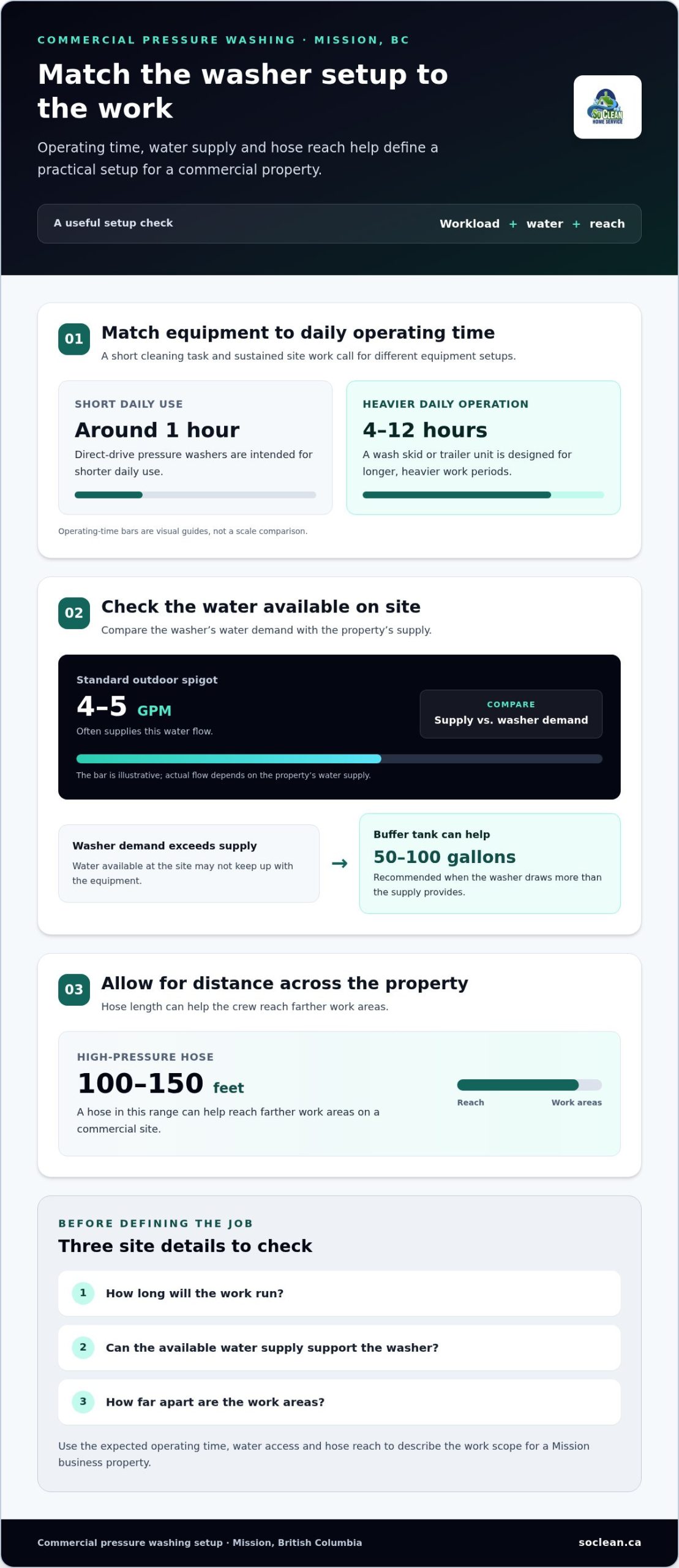
Equipment type offers a practical way to assess whether a setup suits the job. Direct-drive pressure washers are intended for shorter daily use, around 1 hour per day. A wash skid or trailer unit is designed for heavier daily operation lasting 4 to 12 hours. A business with a brief cleaning task has different equipment needs from a site requiring sustained washing.
Water supply is another useful consideration for Mission properties. A standard outdoor spigot often supplies 4 to 5 GPM. When a washer draws more than the supply provides, a buffer tank can help maintain water flow. A 50 to 100 gallon buffer tank is recommended for that situation. This can be relevant at commercial sites where outdoor water access is limited.
- Short cleaning tasks: Direct-drive equipment suits daily use in short bursts.
- Extended work periods: A wash skid or trailer supports heavier daily operation.
- Limited water supply: A buffer tank can support equipment whose flow exceeds spigot output.
- Large properties: A 100 to 150 foot high-pressure hose can help reach farther work areas.
Equipment details help distinguish a residential setup from one intended for commercial demands. A brief clean at a small entrance is a different workload from several hours of work across a large site. The equipment should suit the expected operating time and the water available at the property. Mission businesses can use these details to define the job scope.
For commercial pressure washing in Mission, machine size alone is not enough to compare setups. Consider how long the work will run, whether the water supply can support the equipment, and how far hoses need to reach. These practical details help identify a suitable setup without relying on a pressure rating alone.
What factors affect commercial pressure washing prices in Mission?
Commercial pressure washing quotes depend on the property’s condition and the work required. In Mission, a small storefront entrance is a different job from a large parking area or a commercial building with several surface types. The area, buildup, access, and cleaning method all affect the scope. A useful estimate describes these factors rather than treating every property alike.
Area and buildup: Larger surfaces generally take longer to clean. Oil, embedded dirt, moss, and other stubborn residue may need a different approach from loose dust. If a business wants both a walkway and a service area cleaned, identify each location separately. That gives the scope a clearer picture of the work involved.
Surface material: Concrete, painted finishes, and delicate exterior materials do not all suit the same cleaning method. The material affects the pressure, water flow, and cleaning solution appropriate for the task. Soft washing uses low pressure and may suit delicate surfaces. Protective coatings also affect cleaning choices, so mention any finish when describing the property.
Access and layout: A clear, ground-level entrance differs from a narrow passage or hard-to-reach section. Obstacles, parked vehicles, and multiple work zones can affect how the crew moves around the property. In Mission, describe where cleaning is needed and how the areas connect. This helps define the work without overlooking less visible sections.
Detergent and water planning: Some jobs need cleaning agents to address specific residue; others may rely more on water and the right technique. The buildup and surface guide that choice. Local downpours and persistent moisture can contribute to grime on commercial exteriors, but weather alone does not determine the cleaning method. The surface and soil still matter.
- List each surface, such as concrete paving, siding, or an entrance.
- Describe visible buildup and point out any protective coating.
- Identify access limits, obstacles, and separate work areas.
- State whether the requested scope covers one area or several.
Clear details make estimates easier to compare. Check that each proposal describes the same surfaces, buildup, and work areas. If one scope covers only the entrance while another includes the walkway and loading zone, the figures won’t represent identical work. Ask for a written description of the cleaning method and any detergent planned. For a commercial pressure washing service, review the pressure washing service details alongside the property’s needs.
Equipment is also worth considering when reviewing a commercial pressure washing quote. The equipment and setup described in a proposal can explain how the provider plans to handle the surfaces and access conditions. Compare those details with the scope, cleaning method, and any detergent listed. This keeps the comparison focused on what each quote includes, rather than assuming proposals are equivalent. Ask for clarification if the proposal does not explain how the equipment suits the work.
What types of commercial properties and surfaces can be pressure washed?
In Mission, commercial cleaning plans can cover storefronts, strata properties, warehouses, and service yards. Each site has surfaces with different cleaning needs. A concrete walkway can tolerate a different approach than painted siding or a coated entrance. The property type helps identify likely work areas, while the material and buildup guide the method.
Retail and office buildings: Storefront entrances, sidewalks, and exterior walls collect dirt from daily activity and wet weather. Cleaning paved areas can improve their appearance, while delicate finishes may need soft washing. Before work, identify the material, visible stains, and any protective coating. This helps avoid treating every section as though it were bare concrete.
Strata and multi-unit properties: Shared walkways, parking areas, and building exteriors can all need attention. A site plan helps distinguish public access routes from less-used areas, such as service lanes. In Mission’s damp conditions, moss and grime can build up on shaded surfaces. The cleaning approach should account for the material, not just visible growth.
Warehouses and service properties: Loading areas, exterior concrete, and access paths may collect mud, dust, and vehicle residue. List each zone separately so the scope reflects the site’s actual needs. A loading area, for example, may need a different treatment from a painted wall beside it. Separating the areas also helps prevent unsuitable methods from reaching sensitive finishes.
- Concrete: Walkways, entrance pads, parking surfaces, and loading zones.
- Building exteriors: Siding and other materials, assessed before choosing pressure.
- Painted surfaces: Areas where finish condition and coating matter to method selection.
- Shared spaces: Strata paths, courtyards, and access points with recurring foot traffic.
- Commercial service areas: Exterior work zones where dirt and residue build up.
Not every exterior surface suits high-pressure cleaning. Soft washing is a lower-pressure option that may be considered for some delicate materials. This distinction matters for vinyl siding and roofs, where aggressive water pressure may be unsuitable. Protective coatings also deserve attention: cleaning choices should account for the finish rather than assume the surface is uncoated.
For a practical property assessment, walk the site and record each surface separately. Note its location, material, visible buildup, and any coating. Include nearby storefronts, vehicle routes, and entrances if they fall within the requested work area. These details help distinguish areas suited to pressure washing from those that may need a gentler method. In Mission, note damp, shaded sections where surface buildup may recur.
When planning commercial pressure washing in Mission, technicians at So Clean Home Service evaluate storefront entrances and access points, then consider how equipment will be operated during the work. A pressure washer uses an engine to drive a pump, sending water at high pressure through a closed circuit. Set gas-powered equipment on a flat surface during setup, and check its oil and fuel levels before starting. Using unleaded gasoline, preferably ethanol-free fuel, helps maintain optimal engine performance.
Operating needs can also affect equipment choice for larger sites. A direct-drive pressure washer is not recommended for continuous operation over several hours a day. Pressure-washer bypass mode can overheat the pump if the machine remains in bypass for more than 2 to 3 minutes. These considerations help So Clean Home Service inform planning for work across multiple surfaces and areas.
How do commercial pressure washing companies handle wastewater and runoff in Mission, BC
At a Mission commercial site, pressure-washing water can carry soil, oil, detergent, and loosened debris. Before work starts, map the paved area, nearby drains, and the route water could take. A loading bay beside a storm drain needs a different runoff plan from an isolated entrance pad. Downpours can also change how quickly water moves across the property.
A responsible work plan starts by identifying where wash water could collect. Inspect slopes, curb edges, catch basins, and low points to see whether water may flow toward a drain or neighbouring property. Marking the cleaning boundary helps keep wash water within the intended work area. On a sloped parking lot, for example, crews can work in smaller sections and monitor the downhill edge.
Containment methods depend on the surface and site layout. Temporary barriers, drain covers, or collection equipment may help control water movement. A crew can also limit the work area and direct water toward a collection point. These steps reduce uncontrolled spread, but do not replace a site-specific plan. Detergent use matters too, since cleaning agents mix with loosened material in wastewater.
- Inspect: Locate drains, slopes, entrances, and nearby areas before washing.
- Prepare: Select suitable collection or containment methods for the work zone.
- Clean in sections: Watch water movement as each area is washed.
- Collect and manage: Keep wastewater and debris contained for appropriate handling.
- Review: Check the work area and drainage paths after cleaning.
For a concrete service yard, account for vehicle residue and loose grit. For a storefront walkway, protect adjacent entrances and prevent dirty water from spreading across pedestrian routes. If detergent is used, its selection and application should suit the surface and task. These examples show why one runoff method will not suit every Mission property.
Property managers can help by identifying drains, sharing site access details, and pointing out areas with oil, mud, or recurring buildup. They can also flag sensitive landscaping or neighbouring entrances beside the work zone. A clear site walk-through gives the crew practical information before water is introduced. Ask how the plan will control runoff, collect wastewater, and manage debris from the surfaces being cleaned.
Mission’s wet weather makes runoff planning especially relevant. Rain adds water to a work area, while downpours can move standing water quickly across pavement. Scheduling and work-zone choices should account for conditions on the day. A well-defined plan covers the water’s path from the first rinse through cleanup, rather than focusing only on the cleaned surface.
What permits or environmental rules apply to commercial pressure washing in Mission, BC
For a Mission commercial property, separate two questions: whether the work needs approval and how wash water will be managed. The answers depend on the site, cleaning method, and wastewater route. Do not assume every project follows the same process. A storefront walkway, a service yard with vehicle residue, and an exterior wall each raise different practical considerations.
Start with the property location and scope. Record the surfaces to be cleaned, the work area, and nearby drains. Then note whether the plan uses detergent, soft washing, or pressure washing. These details help frame a permit inquiry and environmental review. A loading area with visible oil residue, for example, warrants closer attention to runoff than a lightly soiled entrance.
Mission property managers can use this preparation sequence:
- Mark the cleaning area and note its surface materials.
- Locate storm drains, slopes, catch basins, and neighbouring entrances.
- Describe the soil or residue, including vehicle grime or loose debris.
- List any detergent or cleaning solution planned for the job.
- Ask the District of Mission which local requirements apply to that specific scope and discharge route.
This matters because permit rules can vary by Mission site. Get a project-specific answer from the relevant authority before work begins, especially if wastewater could reach a drain or leave the property. Describe the actual cleaning activity, rather than simply saying “exterior washing.” Clear details help the authority assess the proposed work.
Environmental planning should also account for where wastewater will go. A paved site beside a storm drain differs from an isolated surface with contained drainage. Detergent, residue, and rainfall can affect water movement. Mission downpours may carry wash water across pavement, so scheduling and work-zone planning should reflect site conditions. The crew should know where water will travel and how it will be controlled.
Keep a record of the site plan, the authority’s guidance, and the cleaning products selected. Share those details with the property manager and crew before setup. If the work area, detergent, or discharge route changes, revisit the plan instead of relying on earlier assumptions. This creates a practical record for future maintenance and recurring exterior cleaning.
For a project-specific cleaning plan, request commercial pressure washing and describe the surfaces, residue, and drainage layout at your Mission property.
So Clean Home Service: Gutter Cleaning
So Clean Home Service helps property owners maintain clean exteriors with gutter cleaning and pressure washing. In Mission, downpours can carry leaves and other debris into roof gutters, where blockages can interfere with water flow. Gutter cleaning removes debris and supports routine exterior maintenance.
Turn to So Clean Home Service when clogged gutters need attention or exterior surfaces need pressure washing. Roof Cleaning and Moss Removal and Window Cleaning are also available for exterior upkeep. Matching the work to the property helps address specific maintenance needs without treating every surface the same way.
For a Mission property, describe the areas that need attention and the buildup you’ve noticed. Contact So Clean Home Service to discuss gutter cleaning or exterior pressure washing.
Set a practical maintenance plan for your Mission property
Commercial pressure washing in Mission works best as part of a clear property-care plan, not just as a last-minute response to visible grime. Choose the areas that matter most to customers, staff, and daily operations. A storefront may prioritize a clean entrance, while a strata manager may focus on shared exterior spaces. Naming that priority keeps the next maintenance decision focused.
Consider how the property is used throughout the day, then plan work around access and regular business activity. This simple step can make exterior upkeep easier to coordinate. Keep the goal practical: maintain the property’s appearance and address surfaces that need attention. A steady plan also gives you a clear starting point when exterior conditions change.
So Clean Home Service offers exterior property maintenance for Mission-area properties. To discuss the work that fits your site, contact So Clean Home Service. A considered plan can help you move ahead with confidence and keep your property ready for the people who use it.
Frequently Asked Questions
What is the difference between PSI and GPM?
PSI and GPM describe different parts of a washer’s performance, so compare both ratings when assessing equipment. For a commercial job, also consider the nozzle and distance from the surface, since these affect how water reaches the material. A useful assessment matches the equipment to the buildup and surface instead of treating either rating as the only measure of cleaning suitability.
What commercial pressure washing services are available in Mission, BC?
So Clean Home Service provides pressure washing for commercial properties in its service area, including Mission, Maple Ridge, Pitt Meadows, Coquitlam, Port Moody, Langley, Surrey, Mission, and Abbotsford. To define a useful scope, identify the exact zones needing attention, such as a customer entrance, shared walkway, or service yard. Note the surfaces and visible residue in each zone. This gives the work plan a clear, property-specific focus.
How do commercial pressure washing methods compare, including soft washing and hot-water washing?
Soft washing uses lower pressure with cleaning agents and may suit delicate materials. A hot-water washer example uses a diesel burner and delivers 3500 PSI at 4 GPM; the method should still match the surface and buildup.