
A gutter can overflow even when the cause is a loose bracket, a leaking connection, or a slope that no longer directs water to the downspout. For seamless gutter repair in Mission, inspecting these areas helps pinpoint the problem and determine the repair needed.
Water near the roofline can be easy to miss, but recurring drips or overflow can affect nearby exterior surfaces. A lasting repair should address the cause, not just the visible symptom.
This article explains what a gutter inspection covers, how bracket, joint, and slope problems affect drainage, and how maintenance can help keep gutters working well. You’ll also learn how local rain and moisture can contribute to wear, and what to consider when assessing a repair.
Key Takeaways
- Look beyond visible leaks: bracket stability, seam condition and gutter slope can all affect how water drains.
- Sound water flow helps reduce the risk of overflow reaching the roofline, exterior surfaces or foundation.
- Seamless gutters have fewer joints where water can seep through, while careful installation supports long-term performance.
- Learn how a focused inspection can distinguish a repairable issue from wider wear and guide the next step.
Eavestroughing and exterior contractors serving Mission and nearby areas
Rain and seasonal leaves in Mission can reveal loose brackets, leaking joints, or drainage problems. So Clean Home Service assesses gutters, downspouts, roof edges, and visible fascia before recommending a repair. Service areas include Mission, Maple Ridge, Pitt Meadows, Coquitlam, Port Moody, Langley, Surrey, and Abbotsford. Roof layouts, tree cover, and access all affect the assessment.
Permit requirements depend on the repair’s scope and whether it changes building features. For a Mission property, confirm applicable requirements with the municipality before scheduling work. An assessment can clarify whether the job is limited to existing gutters or involves related exterior work.
To find a licensed and insured contractor in Mission, ask for clear confirmation of licensing and insurance, plus a written description of the inspection and proposed work. Good communication means explaining which brackets, seams, or slopes need attention, what the repair includes, and how the completed work will be reviewed. Homeowners should receive a clear outline before work starts.
Repair time depends on access, gutter condition, and whether the problem can be corrected with an adjustment or requires a section to be replaced. The usual steps are inspection, a repair plan, bracket or joint work, and a check of water flow. The repair assessment can clarify the work involved.
Working at height carries fall and property-damage risks, especially around wet surfaces or unstable ladders. Leave roof-edge work to a professional crew using suitable access methods. Gutter maintenance matters too: regular cleaning can help keep water flowing through gutters and downspouts, especially when dense trees, pine needles, or overhanging branches add debris. If a section is actively leaking or overflowing, arrange an assessment. Inspection can help distinguish a repair from a broader gutter replacement need.
Water damage and foundation protection
Mission’s heavy rainfall can test gutters when downpours arrive and roof runoff builds quickly. Water should move through the trough, into downspouts, and away from the building. If a blockage or damaged section interrupts that route, water may spill over near the roofline or collect beside the foundation. A contractor assessing storm-related water damage looks for overflow marks, pooling, and signs that runoff is not reaching its intended discharge area.
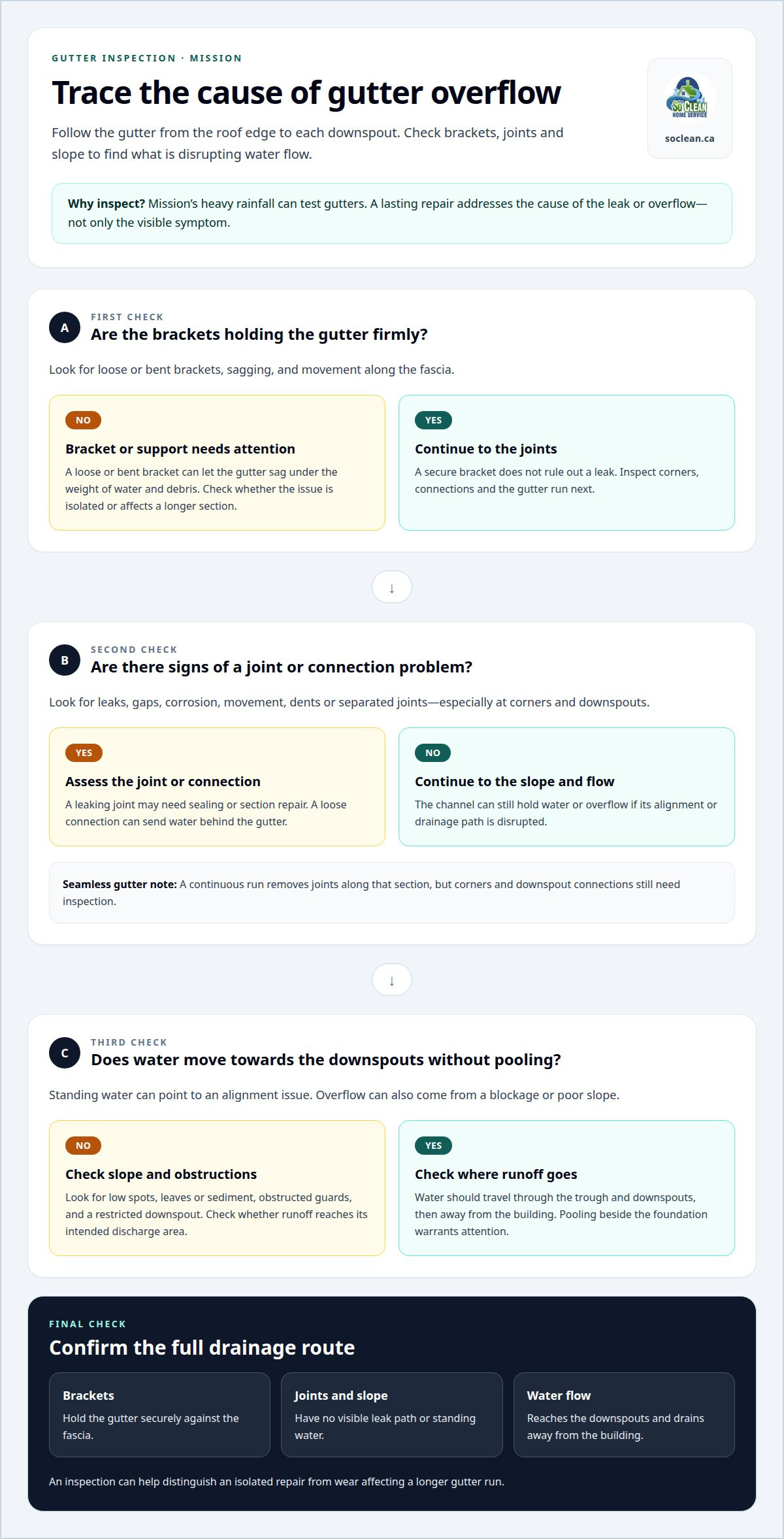
Joints are common leak points in traditional sectional gutters. They can crack or separate, allowing water to seep behind the gutter and reach fascia, roof edges, or exterior walls. Seamless gutters are formed from a continuous sheet of metal, removing joints along the run where water could escape. Connections remain at corners and downspouts, so these areas still need inspection and repair when damaged.
Preparing for heavy rain starts with a clear path for water. Check whether leaves or sediment restrict flow, whether guards are obstructed, and whether downspouts direct water away from the home. Guards can limit debris entering the gutter, but they do not replace cleaning or inspection. If runoff pools beside the foundation, the discharge direction and surrounding ground also warrant attention.
A repair should address the source, not just a visible stain. A leaking joint may need sealing or section repair, while a loose connection can direct water behind the gutter. Poor slope can leave standing water in the channel and contribute to overflow. An assessment links each symptom to its likely cause, then checks that water drains through the repaired route. This helps reduce repeat leaks and clarify potential water damage around the roof edge and foundation.
Gutter lifespan and workmanship commitment
Seamless aluminium gutters can last 20 years or more, depending on installation quality, ongoing care, and exposure to local conditions. In Mission, recurring rainfall puts regular demands on roof drainage. A gutter that hangs unevenly or separates at a connection can hold water, strain its supports, and wear sooner. An assessment should distinguish isolated damage from wear affecting a longer run.
A secure fit along the roof edge is essential. The repair needs to account for slope, bracket placement, corners, and downspout connections. Misalignment can leave water standing in one section instead of directing it towards an outlet. At corners and joints, careful fitting and sealing help reduce leak paths. Each connection matters because a weak point can affect the whole gutter run.
Regular gutter cleaning helps limit debris buildup that can block water flow. Leaves and sediment add weight, while trapped water can contribute to overflow during heavy rainfall. Twice-yearly cleaning is a general schedule for homes in the Fraser Valley; properties under significant tree cover may need quarterly cleaning. The right interval depends on debris buildup and site conditions. These cleaning intervals help keep drainage clear, but they don’t repair loose brackets, damaged joints, or incorrect slope.
Good repair work includes explaining the issue, the proposed fix, and how the result will be checked. The assessment should consider whether brackets hold the gutter securely, joints are sound, and water can reach the downspouts. A recurring drip near a corner may indicate a connection problem, while overflow along a longer section can point to a blockage or poor slope. Clear findings help homeowners understand which repair addresses the problem.
Inspection of brackets, seams and slopes
A thorough inspection follows the gutter from the roof edge to each downspout. It checks whether brackets hold the channel firmly against the fascia. A loose or bent bracket can let the gutter sag under the weight of water and debris. The inspection also looks for gaps, corrosion, and movement at corners. On aluminium gutters, dents or separated joints can indicate impact or wear. These findings help distinguish an isolated defect from damage across a longer section.
Next, the slope along the gutter run is assessed. Water should move towards the downspouts rather than pool in low spots. Standing water can indicate an alignment issue, while overflow during rain may point to restricted flow or inadequate drainage. The repair should address the cause, not just adjust the most visible bracket. A flow check after the work helps confirm that water travels through the channel and exits correctly.
Joint checks cover corners, end caps, and downspout connections. A joint that has pulled apart can leak behind the gutter and wet the fascia. The surrounding surfaces should also be checked for staining or deteriorated material. If the gutter is otherwise in sound condition, a targeted repair may resolve the issue. If several sections are damaged, an inspection can establish the extent before work proceeds.
Regular maintenance supports reliable drainage, but cleaning alone cannot correct a loose support or faulty slope. A professional assessment connects debris, leaks, and visible overflow with the condition of the gutter system. In Mission, this detail matters during wet weather, when small drainage problems become easier to spot. For seamless gutter repair in Mission, ask for an inspection that covers brackets, joints, alignment, and water flow. Arrange professional gutter cleaning to help keep debris from obstructing the system.
So Clean Home Service: Gutter Repairs
So Clean Home Service provides gutter repairs for Mission homeowners dealing with leaking joints, loose brackets, or poor drainage. An inspection identifies the issue so the repair can address the affected section and help restore water flow. If leaves or other debris are contributing to a blockage, gutter cleaning can clear the drainage path.
In Mission, addressing recurring leaks or overflow helps limit repeated water exposure at the roof edge and exterior walls. So Clean Home Service also provides pressure washing, roof cleaning, and moss removal for exterior maintenance.
For gutter concerns in Mission, contact So Clean Home Service to discuss a repair.
Take the next step towards dependable drainage
If you’re considering seamless gutter repair in Mission, describe what you’ve noticed: a drip at a joint, overflow during rain, or water collecting near the roofline. These details help focus the assessment on the affected area and the conditions when the problem occurs. Mention if it keeps happening after rainfall.
So Clean Home Service also provides gutter cleaning, pressure washing, roof cleaning, and moss removal for exterior upkeep. Considering these needs together can help you plan maintenance around your property’s condition.
Contact So Clean Home Service to discuss gutter repairs for your Mission property. A clear description of the issue is a practical place to start, and the right attention can help you move forward with greater confidence.
Frequently Asked Questions
What do seamless gutter repair services in Mission, BC, include?
Seamless gutter repair in Mission can address a damaged section, outlet, corner, or attachment on an existing system. The work starts by identifying the affected area and how it connects to the rest of the gutter run. For example, a repair near a downspout may involve checking both the outlet and its connection.
What are common seamless gutter problems, and which repairs address them?
Common problems include leaking joints, loose attachments, dents, and slow or backed-up drainage. The repair depends on the damaged part and the condition of the surrounding gutter. A dent that restricts water flow may need a different solution from a gap at an end cap. Clearing debris can also help when it is restricting flow.
How can I arrange seamless gutter repairs in Mission, BC?
Describe where the problem occurs and what you see, such as a drip near a corner or water spilling over one section. Note whether it happens during rainfall or continues afterward. These details help direct the assessment. Access to the roofline and the condition of nearby gutter sections also inform the repair plan.
What information helps assess a gutter repair in British Columbia?
Useful details include the gutter material, the approximate location of the damage, and whether one area or several are affected. A photo taken safely from the ground can show staining, a separated connection, or a bent section. An inspection then assesses the gutter’s condition and access before recommending work.
How do I decide whether to repair or replace seamless gutters?
A localized defect may be repairable if the surrounding gutter is still in serviceable condition. Widespread deterioration, repeated failures, or damage across several sections may make replacement more suitable. The decision depends on the system’s overall condition and whether a repair can restore reliable drainage without leaving other damaged areas untreated.
What should I know about gutter repair warranties or service guarantees in Mission, BC?
Review the written terms for the specific repair before work begins. They should identify what the work covers and any applicable limits or conditions. Keep a copy with your maintenance records and the repair description so you can refer to the agreed details if a related issue comes up later.